The film musical is a lost art. Most film musicals have been adaptations of Broadway shows and have met with varying degrees of success, from the multiple-Oscar winner Les Miserables, to the mediocre Tom Cruise vehicle Rock of Ages. However, original film musicals have been in short supply, especially in recent decades.
One of the issues surrounding the dearth of original film musicals stems from audience expectations of the characters. Audiences typically expect characters to react in realistic ways, even when they are in unrealistic surroundings. A film musical such as La La Land turns those expectations upside down, as evidence by both its Golden Globe wins and its impending Oscar buzz.
In this film, Mia (Emma Stone) is an aspiring actress battling confidence issues, while Sebastian (Ryan Gosling) is a struggling musician caught between his love of traditional jazz and the changing music scene. While both of these characters face realistic problems, the use of song and dance to communicate their issues gives the film a new way to convey character development to the audience.
Within this structure, at least in Damien Chazelle's script, the characters' only real antagonists are, in a sense, each other. Their conflicting dreams and their different means of reaching their goals threaten to drive a wedge between them.
Here's an example of how the VOTE method breaks down the character motivations.
Mia's VOTE would look like this:
V: She wants to be a successful actress.
O: After enduring several disastrous auditions, she lacks the confidence to continue pursuing her dreams.
T: She writes a one-woman show as a showcase for her talent.
E: She needs to prove to herself and her parents that her dreams of being an actress are more than just dreams.
Sebastian's VOTE would look like this:
V: He wants to launch his career as a jazz musician.
O: He lives for the glory days of jazz and refuses to recognize the changes in the modern music scene.
T: He joins a band with his friend Keith (John Legend) to make enough money to open his own jazz club.
E: He needs to prove to himself and his critics that his talents haven't been wasted on a dying art form.
You'll notice that love and relationships are not mentioned in their VOTE, nor are there any substantial antagonists standing in their way. In many romance films directed at teens, the pursuit of "true love" acts as the main victory, while a parent or authority figure often stands as the antagonist to the young couple's togetherness. (e.g. Romeo and Juliet)
In most adult romantic movies, the antagonist for each of the lovers is often the other half of the couple. In La La Land, Sebastian and Mia each struggle to find their own ways while trying to maintain their relationship. In a sense, the relationship itself acts as the antagonist, as their efforts to keep their love alive strain against their attempts to establish their careers.
The classic romantic story arc of “boy meets girl, boy loses girl, boy gets girl back” holds true for La La Land...to a point. The surprise ending (which I won't spoil here) puts a twist on that predictable formula, with some satisfying results for the audience. Each song from composer Justin Hurwitz illustrates the character's hopes, fears, and struggles, especially the climactic “Audition (The Fools Who Dream)”.
The key to the success of La La Land is that it conveys all the elements of the VOTE through the heightened reality of the movie musical. The songs serve the purpose of illustrating the character's desires, while the dance numbers act as a form of structured conflict that communicate the clashes between characters without words.
Regardless of if you're writing a stylized musical, a screwball comedy, an action blockbuster, or a serious drama, you have to invest time into developing your characters. All the beautiful songs and graceful dances in the world won't matter if you can't get the reader, the actor, or the audience to care about your characters. The VOTE method is a quick and easy way to give your characters the motivations, hurdles, and drive that will get your story noticed.
If you need help in developing the characters in your screenplay, novel, or TV pilot script, contact Story Into Screenplay at storyintoscreenplayblog[at]gmail[dot]com, or send a message through our Facebook page.
Monday, January 23, 2017
Thursday, December 8, 2016
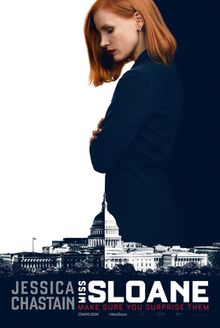
Screenwriting with the VOTE Method: Miss Sloane
This post will mark the first in a series
of film reviews geared toward teaching the VOTE method of character
development. These reviews will not go into in-depth analysis of plot
or story execution, but instead will focus on how you can see the
VOTE method applied in current and classic films.
Each review will look at four principal
characters: the protagonist, the chief antagonist, the protagonist's
primary “helper”, and a minor character. This analysis will help
you see how the VOTE method can be applied to nearly every
significant character, which will help you create more realistic and
believable characters.
The first film we'll examine is Miss
Sloane, a tense political drama written by Johnathan Perera about
a hard-driving lobbyist willing to bend the rules for her clients.
We'll look at how the VOTE method
applies to the characters in Miss Sloane that fit in each type of role:
- Elizabeth Sloane (Jessica Chastain), a fiercely competitive lobbyist
- Pat Connors (Michael Stuhlbarg), Sloane's former colleague turned chief antagonist
- Esme Manucharian (Gugu Mbatha-Raw), Sloane's fellow lobbyist and main “helper”
- Forde (Jake Lacy), a male escort Sloane uses
Please keep in mind that this post will
contain some SPOILERS for the movie.
Elizabeth Sloane's VOTE would look like
this:
V: She wants to ensure enough votes to
stop a filibuster on a controversial gun control bill.
O: She's facing off against both the
“Guardians of the Second Amendment” and her former firm.
T: Her tactics range from planting
documents to employing private detectives to investigate her
colleagues.
E: She needs to show that she can win
against the most overwhelming odds, regardless of who gets hurt along
the way.
Pat Connors' VOTE would look like this:
V: He wants to have enough senators on
his side to kill the gun control bill and keep his client happy.
O: He has to face off against Sloane
and her arsenal of political trickery.
T: His tactics range from turning
Sloane's former assistant against her to planting a “mole” at her
new firm.
E: He needs to win over his client and
his boss to keep his job.
Esme Manucharian's VOTE would look like
this:
V: She wants to ensure enough votes to
stop a filibuster on a controversial gun control bill. (same as
Sloane)
O: She struggles with her past as a
victim of gun violence.
T: She becomes the (reluctant) face of the gun control bill.
E: She needs to recover from her past
and feel safe.
Forde's VOTE would look like this:
V: He wants to get Sloane to open up
about herself.
O: Her reluctance to get close to
anyone, along with the nature of his “occupation”.
T: He tracks her down at a formal event
and tries to start a real conversation.
E: He needs to connect with her and
show that he's more than just a body she can use.
When you write your script, every
character should get a VOTE. If you need help applying these methods
to your characters, contact me at
storyintoscreenplayblog(at)gmail(dot)com, or through the SIS Facebook page.
Wednesday, December 7, 2016
Success Stories: Story Into Screenplay Year-End Update
First off, I want to thank everyone who has supported my projects and Story Into Screenplay in the past year. While I haven't posted as regularly as I would have liked this year, I plan to step up my game in every aspect of my screenwriting career, including finding new ways to help you with your scripts and relating my methods to current major films.
My most notable project, 2014's “Dreamland Murders,” was screened at the Marche du Film at the Cannes Film Festival in May. It was also an official selection of the Director's Circle Festival of Shorts in November.
The Story Into Screenplay blog was also selected as one of the “Top 50 Screenwriting Blogs and Websites for Screenwriters and Filmmakers” by Feedspot. Feedspot is a “modern RSS reader” that lets subscribers read all their favorite blogs in one place.
I will also be serving as a judge for the TV One Screenplay Competition for the second straight year starting later this month. After the contest, I plan to share some lessons I've learned from the scripts I've read from other aspiring writers.
I will also be a regular contributor to The Buzz, the blog for the Virtual Pitch Fest site, which allows writers to submit their pitches and query letters directly to industry pros. My first piece, regarding how “Doctor Strange” will affect the Marvel Cinematic Universe, will be appearing on the site later this month.
I am also working on a book on how to help writers develop their characters, largely based on the principles outlined in my VOTE method. I expect to have the manuscript done in the spring, and I have been in contact with some small press publishers who have expressed interest in bringing it to market.
I will also be appearing at Comicpalooza again in May for another seminar, as well as on several film-related panels. Please keep checking back for more information as the convention date approaches. Get your tickets now!
During the most recent Comicpalooza convention, I was inspired to write a short script involving one of the most recognizable superheroes of all time. Last month, my producer staged a reading of the script for a group of local playwrights and screenwriters, where I received some very useful feedback. I'm not at liberty to say too much about it, but we are considering working with some Houston-area talent to bring this fan film project to the screen sometime next year.
Have a wonderful holiday and a great new year!
Past Successes
My most recent project, “We Are All Made of Stars,” was screened at Houston's Comicpalooza sci-fi convention in June and was selected a finalist for The Zone science fiction short film contest. Not bad for a film shot in the lead actor's living room in an afternoon!
The Story Into Screenplay blog was also selected as one of the “Top 50 Screenwriting Blogs and Websites for Screenwriters and Filmmakers” by Feedspot. Feedspot is a “modern RSS reader” that lets subscribers read all their favorite blogs in one place.Future Projects
As for upcoming projects, I plan to add film reviews and story analysis of current films to this site. I plan to bring a new aspect to film reviews by using the VOTE method to break down the major characters.I will also be serving as a judge for the TV One Screenplay Competition for the second straight year starting later this month. After the contest, I plan to share some lessons I've learned from the scripts I've read from other aspiring writers.
I will also be a regular contributor to The Buzz, the blog for the Virtual Pitch Fest site, which allows writers to submit their pitches and query letters directly to industry pros. My first piece, regarding how “Doctor Strange” will affect the Marvel Cinematic Universe, will be appearing on the site later this month.
I am also working on a book on how to help writers develop their characters, largely based on the principles outlined in my VOTE method. I expect to have the manuscript done in the spring, and I have been in contact with some small press publishers who have expressed interest in bringing it to market.
I will also be appearing at Comicpalooza again in May for another seminar, as well as on several film-related panels. Please keep checking back for more information as the convention date approaches. Get your tickets now!
During the most recent Comicpalooza convention, I was inspired to write a short script involving one of the most recognizable superheroes of all time. Last month, my producer staged a reading of the script for a group of local playwrights and screenwriters, where I received some very useful feedback. I'm not at liberty to say too much about it, but we are considering working with some Houston-area talent to bring this fan film project to the screen sometime next year.
Present Perseverance
As the holidays approach and the year comes to an end, I hope that you all continue to persevere in your efforts to create the best scripts possible. If you need any help in developing your ideas, creating your characters, or sharpening your dialogue, contact me here at storyintoscreenplayblog{at}gmail(dot)com or through the SIS Facebook page.Have a wonderful holiday and a great new year!
Sunday, May 8, 2016
Is Hollywood Out of Ideas? Why You Should “Pre-Sell” Your Script
If you look at the list of films due for release in 2016, you may think that original ideas in Hollywood are as rare as rainy days. It seems like every major film is based off a comic book, novel, or successful film from decades earlier.
“Why don't major studios do anything original any more? Why does everything have to be based off something else? Why won't the big boys give my screenplay the attention it so richly deserves?”
MONEY TALKS
As with most industries operated by multinational corporations, the motivating factor for every decision is a simple one: money. Major studio blockbusters can run up $200 million or more in production costs, with an equal amount for marketing and about the same costs for theatrical distribution. With total investments in major studio productions often exceeding half a billion dollars, is it any wonder that the big players are gun-shy when it comes to bankrolling untested concepts?
ART V COMMERCE
Aspiring screenwriters must understand that films are the most costly and labor-intensive form of artistic expression. Even small “indie” films can cost millions and require dozens of people to pull off, with even less hope of recovering those costs from ticket sales, home video distribution, or product placement. Unlike in other art forms, no one cares about a screenwriter's artistic vision until they can see it as a film that can generate revenue.
PRE-SALE OR NO SALE
A major reason behind the prevalence of sequels and superheroes is the presence of a “pre-sold” audience. Producers and studios can count on strong ticket sales for properties with a proven track record. This philosophy holds true in numerous cases, almost regardless of the quality of the finished product (*cough*BatmanVSuperman*cough*). Without that built-in audience, most producers will be hesitant to take on your project.
KEEP IT SIMPLE
One way to attract producers to your script is to keep the potential budget in mind. You're more likely to get attention from producers for your tight, low-budget horror or comedy script than for a sprawling sci-fi or fantasy epic. Also, keeping the number of actors, locations and special effects to a minimum will help you focus on the core of your story.
CHARACTERS AND ACTORS
A simpler story forces you to create strong characters with powerful motivations to maintain the audience's interest. When you create better characters, you also attract better actors who want to portray those characters. While your script may not attract the top of Hollywood's A-List, an actor with some “name” value may want to take on the project, either to advance their careers or to take on a different type of role. These actors can be your biggest cheerleaders when it comes to financing your project.
IF YOU WANT IT DONE RIGHT...
Another way to attract attention for your script is to shoot it yourself. A “proof of concept” video for your story can go a long way toward selling it to producers and investors. The most prominent example is “Whiplash”, a 2013 short film that garnered such a buzz that it became a feature less than a year later. The feature version won three Oscars, including Best Supporting Actor for J.K. Simmons, and was nominated for Best Picture.
SCREENPLAY OR NOVEL?
If your idea is just too big or sprawling to fit into a short screenplay or a low-budget feature, writing it out as a novel may serve you better in the long run. The novel format gives you a vast canvas on which to create your story, while still using many of the same storytelling tools from your favorite screenwriting books and advice blogs. With self-publishing tools from Amazon and other companies, you can get your story out to an audience, build your fanbase, and play on that success when approaching producers about the screenplay.
ANY BRIGHT IDEAS?
Hollywood is not “out of original ideas” any more than anywhere else. It's just that the Hollywood business model emphasizes the need for a built-in audience before moving forward with any projects. Filmmaking is the riskiest sector of the entertainment business, and the change from an artist-driven system in the 1970s to the need for “franchises” today has killed off the desire to risk it all to display a unique artistic vision. However, if your idea is unique enough, and if your characters have strong enough motivations, your concept can stand alongside the superheroes, giant robots, and teenage wizards as the next Hollywood blockbuster.
GET HELP FROM STORY INTO SCREENPLAY
Whether you want to write a script based on a deeply personal story, or if you want to create the next blockbuster franchise from your original concept, Story Into Screenplay can help. Houston-area writers can receive one-on-one consulting sessions in person at a location of your choosing. Writers outside of Houston can work with me through telephone or Skype sessions. I also offer script coverage reports that can show you how producers and studios would evaluate your script.
If you're in the Houston area from June 17 to June 19, you can also see me at the Comicpalooza Sci-Fi convention. I will be speaking on several panels, as well as presenting my seminar, “Turn Your Story Into a Screenplay”, on June 18.
If you have any questions, or if you'd like to set up a session, contact me at storyintoscreenplayblog[at]gmail[dot]com, or send a direct message through the SIS Facebook page.
“Why don't major studios do anything original any more? Why does everything have to be based off something else? Why won't the big boys give my screenplay the attention it so richly deserves?”
MONEY TALKS
As with most industries operated by multinational corporations, the motivating factor for every decision is a simple one: money. Major studio blockbusters can run up $200 million or more in production costs, with an equal amount for marketing and about the same costs for theatrical distribution. With total investments in major studio productions often exceeding half a billion dollars, is it any wonder that the big players are gun-shy when it comes to bankrolling untested concepts?
ART V COMMERCE
Aspiring screenwriters must understand that films are the most costly and labor-intensive form of artistic expression. Even small “indie” films can cost millions and require dozens of people to pull off, with even less hope of recovering those costs from ticket sales, home video distribution, or product placement. Unlike in other art forms, no one cares about a screenwriter's artistic vision until they can see it as a film that can generate revenue.
PRE-SALE OR NO SALE
A major reason behind the prevalence of sequels and superheroes is the presence of a “pre-sold” audience. Producers and studios can count on strong ticket sales for properties with a proven track record. This philosophy holds true in numerous cases, almost regardless of the quality of the finished product (*cough*BatmanVSuperman*cough*). Without that built-in audience, most producers will be hesitant to take on your project.
KEEP IT SIMPLE
One way to attract producers to your script is to keep the potential budget in mind. You're more likely to get attention from producers for your tight, low-budget horror or comedy script than for a sprawling sci-fi or fantasy epic. Also, keeping the number of actors, locations and special effects to a minimum will help you focus on the core of your story.
CHARACTERS AND ACTORS
A simpler story forces you to create strong characters with powerful motivations to maintain the audience's interest. When you create better characters, you also attract better actors who want to portray those characters. While your script may not attract the top of Hollywood's A-List, an actor with some “name” value may want to take on the project, either to advance their careers or to take on a different type of role. These actors can be your biggest cheerleaders when it comes to financing your project.
IF YOU WANT IT DONE RIGHT...
Another way to attract attention for your script is to shoot it yourself. A “proof of concept” video for your story can go a long way toward selling it to producers and investors. The most prominent example is “Whiplash”, a 2013 short film that garnered such a buzz that it became a feature less than a year later. The feature version won three Oscars, including Best Supporting Actor for J.K. Simmons, and was nominated for Best Picture.
SCREENPLAY OR NOVEL?
If your idea is just too big or sprawling to fit into a short screenplay or a low-budget feature, writing it out as a novel may serve you better in the long run. The novel format gives you a vast canvas on which to create your story, while still using many of the same storytelling tools from your favorite screenwriting books and advice blogs. With self-publishing tools from Amazon and other companies, you can get your story out to an audience, build your fanbase, and play on that success when approaching producers about the screenplay.
ANY BRIGHT IDEAS?
Hollywood is not “out of original ideas” any more than anywhere else. It's just that the Hollywood business model emphasizes the need for a built-in audience before moving forward with any projects. Filmmaking is the riskiest sector of the entertainment business, and the change from an artist-driven system in the 1970s to the need for “franchises” today has killed off the desire to risk it all to display a unique artistic vision. However, if your idea is unique enough, and if your characters have strong enough motivations, your concept can stand alongside the superheroes, giant robots, and teenage wizards as the next Hollywood blockbuster.
GET HELP FROM STORY INTO SCREENPLAY
Whether you want to write a script based on a deeply personal story, or if you want to create the next blockbuster franchise from your original concept, Story Into Screenplay can help. Houston-area writers can receive one-on-one consulting sessions in person at a location of your choosing. Writers outside of Houston can work with me through telephone or Skype sessions. I also offer script coverage reports that can show you how producers and studios would evaluate your script.
If you're in the Houston area from June 17 to June 19, you can also see me at the Comicpalooza Sci-Fi convention. I will be speaking on several panels, as well as presenting my seminar, “Turn Your Story Into a Screenplay”, on June 18.
If you have any questions, or if you'd like to set up a session, contact me at storyintoscreenplayblog[at]gmail[dot]com, or send a direct message through the SIS Facebook page.
Monday, March 28, 2016
Batman v Superman v Character Arcs
WARNING: This post contains MAJOR SPOILERS for Batman v Superman: Dawn of Justice. If you haven't seen this movie yet, please check back after you've seen it.
The reviews for Batman v Superman have ranged from tepid approval to total evisceration. Fans of these iconic characters have expressed their disappointment and frustration with director Zack Snyder's latest effort, while critics of the superhero genre have viewed it as the potential death knell for the embryonic DC Comics “shared universe” franchise.
As a lifelong comic book fan, I see the film as less of an unmitigated disaster and more of a wasted opportunity. Each of the iconic characters represented in the film have formed the basis of some of the most fascinating stories in 20th Century literature, from The Dark Night Returns and A Death in the Family to For the Man Who Has Everything and Whatever Happened to the Man of Tomorrow?
However, the screenplay by Oscar-winner Chris Terrio and Dark Knight Trilogy scribe David Goyer felt like, in the words of Save the Cat author Blake Snyder, “too much marzipan”. Their attempts to squeeze a Man of Steel sequel, a Batman/Superman clash, and the launch of the Justice League franchise gave every character involved too much to explain and too little to do.
SUPERMAN
Let's start with the Man of Steel himself. One of the multiple plot threads weaving through BvS revolves around how the world views Superman after the press links him to a massacre in Africa. When an ambitious U.S. Senator calls Superman to testify at hearings about his involvement, a bomb goes off in the hearing room. Instead of pursuing the perpetrators of these terrorist acts, Superman vacillates so much he makes Hamlet look like Rambo.
The script never gives him a clear goal to pursue until Batman shows up. Even then, the film doesn't show a good reason why he should pursue Batman over the terrorists behind the massacre and the Capitol bombing...other than the fight in the film's title. These threads get dropped so quickly, without any so-called “hero” left to pick them up.
BATMAN
On the other side of the title fight, the script gives much more weight to Batman's character, especially as the bitter, angry, older Bruce Wayne. The script gives Batman a very clear goal: kill Superman before his powers lead to another 9/11, I mean Battle of Metropolis. The audience can understand his motivations, even if his “one percent chance” speech may sound reactionary to some viewers.
The downside comes when, during the much-hyped title fight, Batman switches from foe to friend for what appears to be the most spurious of reasons: the mothers of both heroes share the same first name. This startling revelation suddenly causes Batman to drop his entire line of reasoning throughout the film, leaving audiences confused and frustrated.
LEX LUTHOR
Speaking of inconsistent characters, the characterization of Lex Luthor can't seem to make up its mind. Is he a young techno-nerd who craves attention, like Mark Zuckerberg? A frustrated genius, like Elon Musk? A megalomaniac with daddy issues, like Donald Trump? Or is he just a complete nutcase, like the Joker?
He rambles on about God, Man and the Devil, but he also has no clear motivation to go after Superman. The only reason he wants to destroy Batman is that Batman stole a kryptonite meteor Lex wanted to use to kill Superman. In some ways, the script would make more sense if Bruce and Lex pooled their resources to destroy Superman.
WONDER WOMAN
When screenwriting teachers (such as Your Humble Author) complain about deus ex machina, the Wonder Woman storyline in this film should be Exhibit A. The film shows her as, almost in the literal sense of the term, a goddess from a machine. She shows up to cause trouble for Bruce Wayne, then to save Batman's bacon in the Act III fight with the Doomsday monster. The script gives us no reason as to why she's here or why she's helping these two sides of beef.
LOIS LANE
The most thankless tasks in this film fall to the Lois Lane character. The script shows her as the cliched love interest, the damsel in distress, and the exposition fairy all rolled into one. Her primary role (as in the comics in days of old) seems to be to get put in danger and act as bait for Superman. Her storyline involves an investigation into weapons used to frame Superman for the African massacre, but the script gives it such short shrift that no one either remembers or cares halfway through the film.
JUSTICE LEAGUE
The film also attempts to launch a Justice League franchise by introducing other characters for upcoming films in the most awkward methods possible. The less said about that bit of expositional shoehorning, the better. The “Knightmare” dream sequence and the appearance of a red-clad super-speedster in the Batcave also distract viewers from the core story.
WHO'S TO BLAME?
To be fair, my opinions are based on how the film played out in the theater, not on any draft of Terrio's and Goyer's script. The degree to which the script is to blame for the film's numerous problems, as opposed to decisions by Snyder, DC, or Warner Bros., may be impossible to determine until a draft of the script is made available. With so many characters, so many objectives, and so many threads to knit together, the unraveling of the final product may have been inevitable, regardless of the quality of the script.
WHAT WE'VE LEARNED
The old saying goes, “You can make a bad movie out of a good script, but you can't make a good movie out of a bad script.” Some directors and producers have been known to pursue their “vision” of a script, turning a promising story into an incomprehensible clusterbomb. (I say this from personal experience.) However, these horror stories should not dissuade screenwriters from developing fully-functioning characters, creating clear storylines, and delivering an emotional impact with every line.
COMICPALOOZA 2016
I will be giving my presentation, “Turn Your Story Into A Screenplay,” at the Comicpalooza Sci-Fi convention in Houston. The presentation will start at 5:30pm on Saturday, June 18, at the George R. Brown Convention Center.
I will also be speaking on other panels during the convention, so check out our Facebook page or the Comicpalooza page for schedule information.
A short film I wrote will also be screening at Comicpalooza. “We Are All Made of Stars” tells the story of how young love and time travel make for a combustible mix. Screening dates and times are yet to be announced, so check back with us in the coming weeks.
TURN YOUR STORY INTO A SCREENPLAY
Whether you want to write your own superhero epic, or if you feel the need to see your own personal story on a big screen, the first step lies in creating a dynamic screenplay. Story Into Screenplay offers coverage reports, writing seminars, and one-on-one script consulting services.
To learn more about how Story Into Screenplay can help you with your script, Like us on Facebook or email us at storyintoscreenplayblog(at)gmail(dot)com.
The reviews for Batman v Superman have ranged from tepid approval to total evisceration. Fans of these iconic characters have expressed their disappointment and frustration with director Zack Snyder's latest effort, while critics of the superhero genre have viewed it as the potential death knell for the embryonic DC Comics “shared universe” franchise.
As a lifelong comic book fan, I see the film as less of an unmitigated disaster and more of a wasted opportunity. Each of the iconic characters represented in the film have formed the basis of some of the most fascinating stories in 20th Century literature, from The Dark Night Returns and A Death in the Family to For the Man Who Has Everything and Whatever Happened to the Man of Tomorrow?
However, the screenplay by Oscar-winner Chris Terrio and Dark Knight Trilogy scribe David Goyer felt like, in the words of Save the Cat author Blake Snyder, “too much marzipan”. Their attempts to squeeze a Man of Steel sequel, a Batman/Superman clash, and the launch of the Justice League franchise gave every character involved too much to explain and too little to do.
SUPERMAN
Let's start with the Man of Steel himself. One of the multiple plot threads weaving through BvS revolves around how the world views Superman after the press links him to a massacre in Africa. When an ambitious U.S. Senator calls Superman to testify at hearings about his involvement, a bomb goes off in the hearing room. Instead of pursuing the perpetrators of these terrorist acts, Superman vacillates so much he makes Hamlet look like Rambo.
The script never gives him a clear goal to pursue until Batman shows up. Even then, the film doesn't show a good reason why he should pursue Batman over the terrorists behind the massacre and the Capitol bombing...other than the fight in the film's title. These threads get dropped so quickly, without any so-called “hero” left to pick them up.
BATMAN
On the other side of the title fight, the script gives much more weight to Batman's character, especially as the bitter, angry, older Bruce Wayne. The script gives Batman a very clear goal: kill Superman before his powers lead to another 9/11, I mean Battle of Metropolis. The audience can understand his motivations, even if his “one percent chance” speech may sound reactionary to some viewers.
The downside comes when, during the much-hyped title fight, Batman switches from foe to friend for what appears to be the most spurious of reasons: the mothers of both heroes share the same first name. This startling revelation suddenly causes Batman to drop his entire line of reasoning throughout the film, leaving audiences confused and frustrated.
LEX LUTHOR
Speaking of inconsistent characters, the characterization of Lex Luthor can't seem to make up its mind. Is he a young techno-nerd who craves attention, like Mark Zuckerberg? A frustrated genius, like Elon Musk? A megalomaniac with daddy issues, like Donald Trump? Or is he just a complete nutcase, like the Joker?
He rambles on about God, Man and the Devil, but he also has no clear motivation to go after Superman. The only reason he wants to destroy Batman is that Batman stole a kryptonite meteor Lex wanted to use to kill Superman. In some ways, the script would make more sense if Bruce and Lex pooled their resources to destroy Superman.
WONDER WOMAN
When screenwriting teachers (such as Your Humble Author) complain about deus ex machina, the Wonder Woman storyline in this film should be Exhibit A. The film shows her as, almost in the literal sense of the term, a goddess from a machine. She shows up to cause trouble for Bruce Wayne, then to save Batman's bacon in the Act III fight with the Doomsday monster. The script gives us no reason as to why she's here or why she's helping these two sides of beef.
LOIS LANE
The most thankless tasks in this film fall to the Lois Lane character. The script shows her as the cliched love interest, the damsel in distress, and the exposition fairy all rolled into one. Her primary role (as in the comics in days of old) seems to be to get put in danger and act as bait for Superman. Her storyline involves an investigation into weapons used to frame Superman for the African massacre, but the script gives it such short shrift that no one either remembers or cares halfway through the film.
JUSTICE LEAGUE
The film also attempts to launch a Justice League franchise by introducing other characters for upcoming films in the most awkward methods possible. The less said about that bit of expositional shoehorning, the better. The “Knightmare” dream sequence and the appearance of a red-clad super-speedster in the Batcave also distract viewers from the core story.
WHO'S TO BLAME?
To be fair, my opinions are based on how the film played out in the theater, not on any draft of Terrio's and Goyer's script. The degree to which the script is to blame for the film's numerous problems, as opposed to decisions by Snyder, DC, or Warner Bros., may be impossible to determine until a draft of the script is made available. With so many characters, so many objectives, and so many threads to knit together, the unraveling of the final product may have been inevitable, regardless of the quality of the script.
WHAT WE'VE LEARNED
The old saying goes, “You can make a bad movie out of a good script, but you can't make a good movie out of a bad script.” Some directors and producers have been known to pursue their “vision” of a script, turning a promising story into an incomprehensible clusterbomb. (I say this from personal experience.) However, these horror stories should not dissuade screenwriters from developing fully-functioning characters, creating clear storylines, and delivering an emotional impact with every line.
COMICPALOOZA 2016
I will be giving my presentation, “Turn Your Story Into A Screenplay,” at the Comicpalooza Sci-Fi convention in Houston. The presentation will start at 5:30pm on Saturday, June 18, at the George R. Brown Convention Center.
I will also be speaking on other panels during the convention, so check out our Facebook page or the Comicpalooza page for schedule information.
A short film I wrote will also be screening at Comicpalooza. “We Are All Made of Stars” tells the story of how young love and time travel make for a combustible mix. Screening dates and times are yet to be announced, so check back with us in the coming weeks.
TURN YOUR STORY INTO A SCREENPLAY
Whether you want to write your own superhero epic, or if you feel the need to see your own personal story on a big screen, the first step lies in creating a dynamic screenplay. Story Into Screenplay offers coverage reports, writing seminars, and one-on-one script consulting services.
To learn more about how Story Into Screenplay can help you with your script, Like us on Facebook or email us at storyintoscreenplayblog(at)gmail(dot)com.
Monday, August 31, 2015
Don't Just Write Your Screenplay. Hear It.
I recently attended auditions for a short script that I wrote. For the first time, I was able to see the process of how the actors and director work together to bring the script to life. Since this will be a volunteer project, the actors have to believe in the script to deliver the best performance.
The level of performance I saw in the first round of auditions blew me away. The actors studied the script. They came prepared. They focused on delivering a strong reading. They also came with questions on how the characters should react to each other. The entire experience was an eye-opener and showed how much everyone involved believed in the script.
Many rookie screenwriters ignore the fact that their dialogue is eventually meant to be spoken by actual human beings. When writers hear their dialogue spoken out loud, it can feel as beautiful and life-affirming as holding your newborn child in your arms. When the dialogue is bad or clunky, it can also feel as terrifying and awkward as when Victor Frankenstein's monster lurched to life.
Dialogue is a lot like music: its purpose is to be heard, not to be read. Nobody reads sheet music for fun, but everybody listens to music. Aspiring screenwriters, especially those making the transition from prose to script, must remember that dialogue should be like good music.
Since you can't play every instrument yourself, it's extremely valuable to get a band together for a run-through. The best recommendation I can give is to find a group of actors willing to read through your screenplay, including a separate reader for the stage directions and sluglines. When you listen to trained actors read through a script, even if it's a cold read, you can get a great feel for how your dialogue should sound.
If you don't have a group of trained actors available, get a group of friends and make a party out of it. You may have to spring for food and beverages (save the adult beverages for after the reading), but it'll be worth it to hear your dialogue spoken out loud. This type of social reading can also allow your friends to offer honest criticism of the script, rather than the pat “It's nice/I like it” answers they give to protect your feelings.
A live reading can answer numerous questions about your dialogue:
- Is it too long? Are the actors running out of breath before they can finish a line?
- Is it clear? Does the meaning you intended to convey come across?
- Does it serve the story? Is it just filler before you get to the “good stuff”?
- Does it reveal aspects of the character? Does it advance the character toward his/her goals in that scene?
- Is it “on the nose”? Does it force characters to “tell” the audience the story, rather than show it through their actions?
Remember, the object of writing a script is not to write a script. The object of writing a script is to have it turned into a film that producers will make, actors will perform, and audiences will pay to see. If you hear your dialogue out loud and cringe at every word, go back and rewrite it with the above questions in mind.
For those writers who feel they need additional help with their dialogue, Story Into Screenplay now offers coverage reports. These reports look just like those from studio readers, including a logline and 1-2 page synopsis, and offer grades on:
- Structure
- Concept
- Character Development
- Dialogue
- Entertainment Value
- Story Logic
- Action
- First Impression
- Spelling/Grammar
- Format
- Overall Impressions
For more information on how to get a coverage report for your script, please email storyintoscreenplayblog(at)gmail(dot)com. Please include the phrase “SIS Coverage Reports” in your email. You can also reach out through our Facebook and Twitter links.
You can also check out my recent interview on the Fountain of Youth Productions page. The interview was geared to promote the “Summer of Screenwriting” Program, which helps young screenwriters learn their craft.
For more adventures of a working screenwriter, check out Paul Zeidman's blog. He's a very talented Bay Area writer with lots of great stories.
Monday, August 17, 2015
Dare-Devil in the Details: How Small Items Can Reveal Big Things in Your Screenplay
As a lifelong comic book fan, I've collected thousands of comics over the years, including a long run of the Marvel series Daredevil. However, when it comes to the Daredevil Netflix series, I've been inexcusably late to the party. I've watched up to Episode 9 (“Speak of the Devil”) and every episode has shown tight writing, understated direction and subtle performances.
While Charlie Cox's Matt Murdock shows the deep-seated conflict between his duty to uphold the law and his need for justice outside it (“Wants vs. Needs"), the real show-stealer has been Vincent D'Onfrio as Wilson “Kingpin” Fisk. In Episode 8 (“Shadows in the Glass”), we get one of the best Marvel “origin stories” since Captain America: The First Avenger, but with a much darker tone.
MAJOR SPOILERS FOLLOW
The episode opens with Wilson Fisk waking from a nightmare and staring at the white painting he purchased from Vanessa (Ayelet Zurer). He goes through what seems like a normal routine – making an omelet, eating breakfast, selecting his suit, putting on his cufflinks.
When he checks his reflection in a mirror to see a pudgy boy covered in blood. While most writers would use this as a “jump scare”, the scene also serves as a “jumping off point” for Fisk's origin story.
Young Wilson (Cole Jensen) learns from his father (Domenick Lombardozzi) that the only emotion a “real man” should feel is rage. The senior Fisk campaigns for a seat on the City Council, while wearing the same cufflinks the adult Wilson was wearing in the opening scene.
When his father loses the election, he blames Wilson and his mother. He orders Wilson to stare at a blank white wall, which bears a close resemblance to the painting he bought from Vanessa. When his father assaults his mother, Wilson targets his father with that rage - and the hammer he used to nail his father's campaign signs.
(Random thought: If Pixar had tried to make Inside Out about Wilson Fisk, Joy, Sadness, Fear and Disgust would all be lying dead at Anger's feet. Marvel and Pixar are both owned by Disney, so does that leave the door open for a crossover?)
The details in the young Fisk story – the cufflinks, the hammer, the painting – all come full circle when Fisk's assistant Wesley (Toby Leonard Moore) brings Vanessa in to calm him down after a meeting goes badly. Fisk explains his family history to Vanessa, including why he wears his father's cufflinks every day.
“I do it to show that I'm not my father,” he tells her. “I do it to show I'm not a monster.” This line goes back to characters not saying what they really mean ("Screenplay Subtext: Don't Say What You Mean") , as he knows that he's a monster but he's not ready to admit it.
Instead of running away from this “monster,” Vanessa embraces him and enables his transition from lurking in the shadows to basking in the New York limelight. She changes his wardrobe, including his cufflinks, and enables him to go public with his plans to transform Hell's Kitchen.
The writers also avoid the cliché of the “good girl” turning the “bad boy” into a “good man.” With Vanessa's encouragement, Fisk becomes even more dangerous, as his public appearances hamper the efforts of Matt, Foggy (Elden Henson), Karen (Deborah Ann Woll) and Ben (Vonde Curtis-Hall) to expose his criminal activities.
Screenwriters have such a limited time to tell an effective story. Every word should serve either to reveal an aspect of the character or to move the story forward. The Daredevil writers show how to accomplish both of those tasks in nearly every episode. Rookie writers can find ways to use images, props, or even favorite foods to achieve these goals.
You can contact Story Into Screenplay at StoryIntoScreenplayBlog(at)gmail(dot)com and enter “Loyal Reader Discount” in the subject line to find out more about this limited time offer. You can also check out our Facebook page for updates and links to other screenwriting resources.
While Charlie Cox's Matt Murdock shows the deep-seated conflict between his duty to uphold the law and his need for justice outside it (“Wants vs. Needs"), the real show-stealer has been Vincent D'Onfrio as Wilson “Kingpin” Fisk. In Episode 8 (“Shadows in the Glass”), we get one of the best Marvel “origin stories” since Captain America: The First Avenger, but with a much darker tone.
MAJOR SPOILERS FOLLOW
The episode opens with Wilson Fisk waking from a nightmare and staring at the white painting he purchased from Vanessa (Ayelet Zurer). He goes through what seems like a normal routine – making an omelet, eating breakfast, selecting his suit, putting on his cufflinks.
When he checks his reflection in a mirror to see a pudgy boy covered in blood. While most writers would use this as a “jump scare”, the scene also serves as a “jumping off point” for Fisk's origin story.
Young Wilson (Cole Jensen) learns from his father (Domenick Lombardozzi) that the only emotion a “real man” should feel is rage. The senior Fisk campaigns for a seat on the City Council, while wearing the same cufflinks the adult Wilson was wearing in the opening scene.
When his father loses the election, he blames Wilson and his mother. He orders Wilson to stare at a blank white wall, which bears a close resemblance to the painting he bought from Vanessa. When his father assaults his mother, Wilson targets his father with that rage - and the hammer he used to nail his father's campaign signs.
(Random thought: If Pixar had tried to make Inside Out about Wilson Fisk, Joy, Sadness, Fear and Disgust would all be lying dead at Anger's feet. Marvel and Pixar are both owned by Disney, so does that leave the door open for a crossover?)
The details in the young Fisk story – the cufflinks, the hammer, the painting – all come full circle when Fisk's assistant Wesley (Toby Leonard Moore) brings Vanessa in to calm him down after a meeting goes badly. Fisk explains his family history to Vanessa, including why he wears his father's cufflinks every day.
“I do it to show that I'm not my father,” he tells her. “I do it to show I'm not a monster.” This line goes back to characters not saying what they really mean ("Screenplay Subtext: Don't Say What You Mean") , as he knows that he's a monster but he's not ready to admit it.
Instead of running away from this “monster,” Vanessa embraces him and enables his transition from lurking in the shadows to basking in the New York limelight. She changes his wardrobe, including his cufflinks, and enables him to go public with his plans to transform Hell's Kitchen.
The writers also avoid the cliché of the “good girl” turning the “bad boy” into a “good man.” With Vanessa's encouragement, Fisk becomes even more dangerous, as his public appearances hamper the efforts of Matt, Foggy (Elden Henson), Karen (Deborah Ann Woll) and Ben (Vonde Curtis-Hall) to expose his criminal activities.Screenwriters have such a limited time to tell an effective story. Every word should serve either to reveal an aspect of the character or to move the story forward. The Daredevil writers show how to accomplish both of those tasks in nearly every episode. Rookie writers can find ways to use images, props, or even favorite foods to achieve these goals.
Get a FREE Screenwriting Consultation
If you're dealing with a devil in your details, contact Story Into Screenplay for a FREE screenwriting consultation session. If you also book a paid session during the month of August, you will receive a 20 percent discount on all paid sessions.You can contact Story Into Screenplay at StoryIntoScreenplayBlog(at)gmail(dot)com and enter “Loyal Reader Discount” in the subject line to find out more about this limited time offer. You can also check out our Facebook page for updates and links to other screenwriting resources.
Subscribe to:
Posts (Atom)