Gerald Hanks Filmography

Sunday, August 10, 2014

Wants vs. Needs: How Screenwriters Approach Character Motivation

One of the biggest mistakes rookie screenwriters make is to confuse a character's needs with his goals. They think in terms of what the character “needs” to achieve instead of what he actually “wants” to accomplish. While the two components share a symbiotic relationship, you should focus on illustrating the character's needs by showing what he really wants.

Wants Are Concrete
In the earlier post where we discussed the “VOTE” method, the V stood for “Victory”. The Victory serves as the character's specific primary goal.

  • The baseball player wants to win the game.
  • The housewife wants to find her missing daughter.
  • The detective wants to catch his wife's killer.

The character's goal should be clearly visible to the audience, in that it clues them in to what the character truly wants and how his actions take him closer to it or further away from it.

Needs Are Abstract
The final component of the VOTE method is the “E for Energy”. The Energy represents the emotional need the character fills by accomplishing the Victory.

  • The baseball player needs to earn his father's respect.
  • The housewife needs the love of her family.
  • The detective needs revenge and closure. 

The character's need should be clear during your writing process, even if it remains hidden to the audience.

Wants Drive The Plot 
A strong understanding of a character's specific goals will also solve many problems writers encounter, including plot planning and “writer's block”. The character's desire to achieve his goals will drive him to make choices and take actions. These choices and actions will reveal the nature of the character to the audience and drive the story forward to its conclusion.

Needs Drive The Theme
Here are some common examples of themes:

  • “Love conquers all.”
  • “Money can't buy happiness.” 
  • “It's what's inside that counts.”

Too many beginning writers worry about how to depict the “theme” in their stories. While a strong script can carry a serious message, the primary intention of your story should be to entertain the audience. When you determine what your character needs, the methods you choose in how the character meets those needs will demonstrate your theme.

Wants Are Unique
If you're worried about how to make your story stand out, give your character a unique goal.

  • A washed-up boxer wants to fight the world heavyweight champion. (Rocky)
  • A World War II-era super-soldier wants to adjust to life in the 21st Century. (Captain America: The Winter Soldier)
  • An alien female wants to kidnap and seduce hitchhikers. (Under the Skin)

Unique goals make for memorable characters and interesting stories.

Needs Are Universal
Regardless of genre, period or budget, each successful film portrays a character pursuing a universal need. The character's need can be as basic as day-to-day survival, as deep as true love, or as dark as attaining power at any cost. When you find your character's need, you have found the key to how the audience will relate to that character.

If you want a script that fulfills the wants and needs of producers and agents, contact us at StoryIntoScreenplayBlog [at] gmail [dot] com. We conduct face-to-face or online consultations with new and experienced screenwriters. You also check out out us on Facebook, follow us on Twitter and check out our YouTube channel.

Monday, June 23, 2014

Masters of Screenwriting: How A Great Story Resembles Great Sex

The Showtime series “Masters of Sex” dramatizes the groundbreaking studies in human sexuality conducted by Dr. William Masters (Michael Sheen) and his assistant, Virginia Johnson (Lizzy Caplan). The Masters and Johnson studies broke down human sexual response into four phases of a cycle: Excitement, Plateau, Climax and Resolution. Even if your story has nothing to do with sex, you can still follow the structure of this cycle to get a “rise” out of your audience.

Excitement: Get the Audience's Attention

According to Masters and Johnson, the signs of the “excitement” or “arousal” phase include a rise in heart rate, respiration and blood pressure. The sensory stimuli that trigger this phase can include a stolen glance, an enticing smile, a whispered word, or a favorite song, depending on the individual.

In a conventional three-act script, Act I of your script should include visual images, sound cues or dialog that attract the audience's interest and get them excited for the story you want to tell.

===
INT. ALPHA BETA GAMMA HOUSE – NIGHT
FRAT BOY drinks beer and laughs with a group of FRIENDS. The new fraternity pin on his jacket catches the light.

SORORITY GIRL enters and looks around.

Boy looks up and sees Girl across the room. Girl notices Boy and smiles at him. Boy smiles back and turns away.
====

Setup: Boy and Girl at a college party.
Inciting incident: Boy sees girl smile at him.
Debate: Does Boy ask Girl to dance or does he stick with his friends?

Plateau: Build the Tension

Rather than the “flat” image the word conveys, the “plateau” phase involves the increasing tension and anticipation of the sexual encounter. Once you've engaged and attracted the audience in Act I, you must use Act II to build the tension and push the audience to the brink of either release or frustration.

===
INT. ALPHA BETA GAMMA HOUSE – NIGHT
Friends encourage Boy to approach Girl. Boy takes tentative steps toward Girl.

Girl shuffles her feet, twirls her hair, suppresses a nervous giggle. DJ plays a SLOW SONG.

Boy reaches for Girl's hand. Girl looks down, then back up into his eyes, then takes his hand.

Boy leads her to the dance floor. They hold each other close as they dance together.
===

The tension builds as Boy debates whether or not to approach Girl. Girl also debates as to whether or not she wants to dance with Boy. Boy takes the initiative and Girl responds. They build a closeness that ramps up the tension between them and builds on what can happen later that evening.

Climax: Release the Tension

In the Masters and Johnson model, the climax phase releases the tension and creates a sense of euphoria. At some point in your script, the audience can't take another page of the building tension and wants a release. Act III serves as the payoff to all the tension that you've built up in the preceding acts.

====
EXT. DELTA EPSILON ZETA HOUSE – NIGHT
Boy and Girl hold hands as they walk toward the front door. They step up to the porch and exchange nervous glances.

He unclips his fraternity pin and pins it to her collar. She smiles, gives him a quick kiss and enters the house.
====

The climaxes of your scripts need not be so literal in their interpretation of the word, but they must show that the old world has passed and a new status quo has taken hold.

Resolution: Take a Breather

After the climax, the participants enter the “resolution” or “afterglow” phase, in which the heart rate slows down and the blood pressure drops. The last few pages of your script should also allow the audience to take a breather, assess the situation and walk away with a sense of satisfaction.

====
INT. BEDROOM – DAY
An OLD WOMAN adjusts her black dress and hat in a mirror. She goes to the dresser and adjusts several framed photos of herself and an OLD MAN.

The photos include a retirement party for the Old Man, a college graduation with her, the Old Man and their SON, a five-year-old's birthday party, and a wedding photo of the Boy and Girl.

She picks up a small jewelry box and opens it. The fraternity pin catches the sunlight.

She removes the pin from the box, pins it to her dress and smiles.

Her son enters the room, wearing a black suit and a somber expression. He sees his mother and the pin on her dress. He gives her a curious look.

She smiles, pats him on the chest and leads him out of the room.
====
While your script doesn't have to be about sex, it does have to take the audience on the same journey of excitement, tension, climax and resolution. As with any good encounter, you want the reader to leave with a smile and a warm memory, not with a sense of regret and a “walk of shame”.

If you want a script leaves the reader with a smile, contact us at StoryIntoScreenplayBlog [at] gmail [dot] com. We give new and experienced screenwriters face-to-face or online consultations on their story ideas, outlines and finished scripts. You also check out out us on Facebook, follow us on Twitter and support us on our Amazon store.

Monday, June 16, 2014

"Stone Cold" Screenwriting: Arrive. Raise Hell. Leave.

During the late 1990s and early 2000s, no one in the offbeat world of professional wrestling was a bigger star than “Stone Cold” Steve Austin. Although his chief in-ring rival, Dwayne “The Rock” Johnson, became an international movie star, Austin was much more popular in his role as the anti-hero who beat up his boss, flipped off the crowd, and poured beer down his throat.

So what does pro wrestling (or “sports entertainment”) have do to with screenwriting? Among the numerous merchandise items designed for his character, Austin had a T-shirt printed with the motto: “Arrive. Raise Hell. Leave.” As a screenwriter, you would do well to keep that motto in mind when writing each scene.

Arrive (Late)

Many rookie screenwriters write their scenes as if they need to fill in every detail. Instead of having your character leave the house for work, your scene may show the character showering, brushing his teeth, getting dressed, eating breakfast, grabbing his keys and wallet, and heading out the door. Unless these actions reveal some specific aspect of your character or relate directly to your story, you should cut these extraneous activities and get to the meat of the scene as quickly as possible.

Raise Hell

In a previous post, we looked at the reasons you should add conflict in every scene. Conflict can serve one of two purposes: it either moves your story forward, or it reveals aspects of your characters. Conflict moves your story forward by showing the barriers between your protagonist and his goal. It also reveals important aspects of your characters by showing what your protagonist will do to overcome those barriers and achieve those goals. If your character doesn't “raise hell” to get through those barriers, your scene (and the entire story) will fail to capture the audience's attention.

Leave (Early)

In each scene, every one of your characters should have a goal in mind. Your character either achieves this “scene goal” or comes up short. In either case, your character should not take a lengthy period to discuss, analyze or recap what just happened. Your characters (and the audience) know what happened, so your best choice is to move on to the next scene. The following scene can involve either the next step in your character's arc, or a strategy session to develop a new plan where the previous one failed, but you need to get out of each scene and onto the next as quickly as possible.

Open Up a Can

In his interviews to promote an upcoming match, Austin often promised to “open up a can of whup-ass” on his opponents. Although he didn't always win every match, he kept his promise for giving an exciting and impactful performance every time. Shorter scenes also allow you to create emotionally powerful moments in your screenplays. With longer scenes, especially those that take their time getting to the point, you risk losing your audience before you can open up a can of emotional “whup-ass”.

Deliver a “Stone Cold” Stunner

While filmmakers are always on the lookout for strong stories, they also must keep an eye on the expenses involved in scouting, casting, setting up, shooting and editing each scene. Short scenes show producers that you can write an economical story, in terms of both time and money. When your scenes can convey the action of your story in short, powerful bursts, you're on your way to delivering a “stunner” of a script.

If you want a script that kicks ass, gimme a “Hell Yeah!” Or, you can contact us at StoryIntoScreenplayBlog [at] gmail [dot] com. We provide face-to-face or online consultations for both new and experienced screenwriters. Whether you want to polish your script for contests, prepare it for agent meetings or hone your skills for pitch fests, we can help. You also check out out us on Facebook, follow us on Twitter and support us on our Amazon store.

Monday, June 9, 2014

Short Timers: Writing Scripts Under a Deadline

Napoleon Hill, the 20th Century American author of motivational books like Think and Grow Rich and The Law of Success, once wrote, “a goal is a dream with a deadline.” Thousands of screenwriters have the goal of seeing their works on a big screen in front of a receptive audience, but too many of them either put off developing their scripts or over-edit their scripts (and themselves) to the breaking point. These writers preserve their “dreams” of becoming successful screenwriters at the expense of actually achieving those dreams.

Make a Film in 48 Hours?

For the past three years, I have had the privilege of working on the 48 Hour Film Project, a contest in which a team must write, rehearse, shoot, edit and deliver a short film in 48 hours. The project organizers give the team a genre, character name, occupation, prop and line of dialogue, all of which must be included in the final product. This year's result was "Dreamland Murders", a dark comedy of lust, betrayal and murder set in the Roaring Twenties.

Deadlines: Restriction or Resolution?

Many rookie screenwriters view deadlines as a restriction on their freedom of expression. However, professional screenwriters understand that dozens of jobs, thousands of man-hours and millions of dollars depend on them delivering the best story they can within a specific deadline. These writers practice their craft to the point that they can take the specific elements that a producer or director give them and turn those pieces into a complete picture.


Deadlines and Dollar Signs

Writers who can't write under a deadline are hobbyists, not professionals. Hobbyists can take their time and enjoy the writing process in their time away from their “day jobs”. For professional writers, writing is our “day job”. We need to write to pay the rent, keep the lights on and put food on the table. Most professional screenwriting contracts have deadlines that range from 8 to 12 weeks for first drafts and 4 to 6 weeks for revisions. Writers who consistently deliver on those deadlines often get more and better assignments, while those who can't deliver get left behind.

Find Writing Deadlines

Since many of you are not professionals (yet), you may need another source of motivation to force you to meet deadlines. With so many screenwriting contests, pitch fests, and film festivals available worldwide, writers certainly don't lack for either motivation or deadlines. If your script needs work, work on it as much as you can between now and the deadline. However, don't stress out if it doesn't meet your idea of perfection. As Lorne Michaels, long-time producer of “Saturday Night Live” told the Harvard Business Review, “Knowing the deadline is real. That focuses people’s thinking. We don’t go on because we’re ready. We go on because it’s 11:30.”


If you need help in delivering your script under a deadline, contact us at StoryIntoScreenplayBlog [at] gmail [dot] com. We offer one-on-one consultations for rookie screenwriters and can prepare your script for contests, agent meetings or pitch fests. You also check out out us on Facebook, follow us on Twitter and purchase products through our Amazon links.

Story Into Screenplay also has a new YouTube channel, where we recently posted recordings of comic book legend Stan Lee's appearance at Houston's Comicpalooza convention.

Monday, May 19, 2014

Say Hello to the Bad Guy: 5 Keys to Creating an Effective Antagonist

Click to Purchase
Blu-Ray/DVD Combo Pack
on Amazon.com

I recently had the pleasure of watching Necessary Evil: Super-Villains of DC Comics, a documentary about the origins and motivations of the “bad guys” who battle the various superhero icons of the DC Comics Universe. The film uses interviews with writers, actors and directors to examine the motivations behind such memorable characters as Lex Luthor, the Joker and Sinestro.

Regardless of if you're writing a superhero action epic, an  intimate family drama, or an over-the-top slapstick comedy, you need a strong antagonist. While some films use larger entities (Mother Nature, the Devil, the System) as a barrier in the protagonist's quest, most scripts employ a personification of these forces to stand in the hero's way.

However, your antagonist needs more than a black hat and a spindly mustache to be truly memorable. Here are some keys to creating the characters that audiences love to hate.

Click to Purchase
DVD on Amazon.com

Opposing Forces

The saying “opposites attract” may not always in relationships, but it does for audiences. Moviegoers want to see two contrasting characters clash in intense and fascinating ways. If your protagonist breaks the rules to achieve a just outcome, then your antagonist must employ the rules almost solely for his own benefit. In The Heat, by-the-book FBI Agent Sarah Ashburn (Sandra Bullock) confronts Boston Police Detective Shannon Mullins (Melissa McCarthy) on her lack of procedural compliance, fashion sense and personal hygiene.

Click to Purchase
Blu-Ray on Amazon.com

Lack of Responsibility

Audiences admire the protagonist who will take responsibility for his own mistakes, while they heap disdain on those who point fingers and avoid blame. You can create some interesting conflicts when your protagonist tries to get your antagonist to fix the damage he's caused, while the antagonist blames everyone else around him. In Thor, Loki (Tom Hiddleston) blames both Odin (Anthony Hopkins) and Thor (Chris Hemsworth) for his villainous ways and refuses to take responsibility for his actions.

Click to Purchase
Blu-Ray/DVD Combo Pack
on Amazon.com

Unjust Actions

From childhood, we're told, “life isn't fair”. While real life is rarely fair, audiences expect movies to address obvious injustices. Your antagonist must create unjust situations that force the protagonist to overcome them – and the audience to root for him to do so. In The Hunger Games: Catching Fire, President Snow (Donald Sutherland) continually institutes unjust changes in the rules of the Hunger Games to keep Katniss Everdeen (Jennifer Lawrence) from addressing the injustices of the Panem government.

Click to Purchase
Blu-Ray/DVD Combo Pack
At Amazon.com

Doubling Down

As your protagonist gets closer to his goal, your antagonist should double down on his efforts to stop him. These efforts raise the stakes for the hero and emphasize the ruthlessness of the villain. The antagonist's renewed efforts often become less subtle, more violent or more unreasonable. In Machete Kills, the efforts of billionaire Luther Vos (Mel Gibson) to stop Mexican agent Machete (Danny Trejo) escalate all the way to launching a nuclear weapon and escaping in his own private spaceship.

Click to Purchase
Blu-Ray/DVD Combo Pack
At Amazon.com

Villain as Hero

If you were to switch the roles of the protagonist and antagonist, would your script still make sense? The answer to this question can turn your antagonist from a plot device into a fully-formed character. Each of your characters must function as if they have their own story to tell. This idea is especially true for the main antagonist most of all, as the villain's story serves to highlight the hero's qualities. In Captain Phillips, the pirate leader (Barkhad Abdi) takes over a cargo ship captained by Richard Phillips (Tom Hanks), not because he's an evil terrorist, but because he needs the money from the theft to feed his family.

If you need help in creating a powerful villain in your script, contact us at StoryIntoScreenplayBlog [at] gmail [dot] com. We provide one-on-one consultations for newbie screenwriters and can help you get your script ready for pitches, contests or direct sales. You can also Like us on Facebook, follow us on Twitter, and purchase home videos through our Amazon links.

NOTE: You can also find me at the Texas International Comic Convention (aka Comicpalooza) in Houston Memorial Day weekend. I'll be there along with a truly legendary writer who knows a little something about creating memorable villains.

If you'd like to discuss your project, and if you'll be attending the convention, please send an e-mail with the subject “Comicpalooza” and a method of contacting you. Hope to see you there!

Monday, May 12, 2014

Screenplay Subtext: Don't Say What You Mean

Subtext in screenplays is much like obscenity in media. As Supreme Court Justice Potter Stewart put it in the landmark 1973 decision Jacobellis v. Ohio, “I know it when I see it.”

Most rookie screenwriters undervalue the use of subtext. They often favor telling the story in a manner as blunt and straightforward as possible to ensure that the script delivers their message. They often fail to see that the most effective way to deliver a message comes from their characters avoiding the core message like the proverbial elephant in the room.

What is Subtext?

The Merriam-Webster Dictionary defines "subtext" as "the implicit or metaphorical meaning (as in a literary text)". While your written dialogue and actions carry one meaning, the deeper - and often contradictory - meanings behind those words and actions arise from the subtext. Your effective use of subtext can place you in the ranks of the true professional storytellers and separate you from the amateurs content to ride along the surface of the story.

Actions Speak Differently Than Words

You can often use the character's actions to illustrate subtext. These actions can either reinforce or, more frequently, contradict the character's dialogue. In the British film Locke, a construction site manager (Tom Hardy) talks with his wife, sons, boss and co-workers in an honest and conscientious manner. However, his actions on a car ride to London show that he's willing to throw it all away to make up for one mistake.

Denial: More than a River in Egypt

Another great source of subtext comes from how your main character deals with his major flaws. As in real life, most characters don't reach a full understanding of their weaknesses until the worst happens. The character can be in denial, like the alcoholic who says he can hold his liquor. She can persevere and bull-rush her way through the obvious obstacles, like keeping a broken relationship together for the sake of her children. All of these can reveal aspects of the character and the story through subtext.

Subtext and Conflict

As you've seen in an earlier post, any scene involving one or more actors must include some conflict. You can make this conflict a loud, boisterous argument, a tense, whispered conversation or an apparently agreeable exchange. The “surface conflict” comes from the content, tone and volume the actor uses to deliver the lines. The “subtext conflict” comes from the goals each character wants to achieve in the conversation and how they navigate the obstacles between them and that goal.

Read Between the Lines

Contrary to popular opinion (as fueled by some less-than-stellar efforts), actors do more than stand in place, look pretty and read lines on a page. Actors rely on subtext to deliver effective performances. They use subtext to determine the character's motives, goals, and fears. When your script has rich subtext, the actor's job turns from a recitation of lines into an embodiment of your character.

If you need help in finding, building or enhancing the subtext in your script, contact us at StoryIntoScreenplayBlog [at] gmail [dot] com. We offer individual consultations for aspiring screenwriters, which can give you the tools to get your script noticed by directors, producers and agents. You can also Like us on Facebook and follow us on Twitter for more updates.

Monday, May 5, 2014

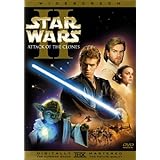
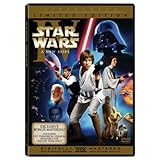
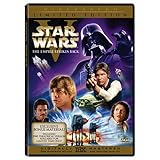
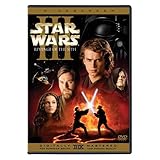
May The Force Be With You: 5 Ways to Create Force-ful Screenplay Dialogue

"You can type this stuff, George, but you can't say it."
- Harrison Ford to George Lucas on the set of Star Wars Episode IV: A New Hope, 1976


Click Poster to Purchase
DVD on Amazon.com
Between yesterday's celebration of “Star Wars Day” and the recent news on the casting for the upcoming Episode VII, the Star Wars franchise has captured the imagination of millions of moviegoers for generations. While most viewers allow themselves to be caught up in the action, adventure and magic of the story, even the most ardent Star Wars fans will admit that Lucas's dialogue often induced more painful reactions than a session with an Imperial interrogation droid.

So how do you stop your characters from sounding as annoying as Jar-Jar Binks or as pedantic as C-3PO? How do prevent them from becoming roaring, one-note anger machines like Chewbacca or indecipherable fountains of pseudo-wisdom like Yoda? The best way to prevent your character's dialogue from grating on the ears of the audience is to examine the purposes that dialogue serves in your script.

Click Poster to Purchase
DVD on Amazon.com

Jump into Hyperspace: Move the Story Forward

Many new writers misinterpret the purpose of dialogue. They often use dialogue to tell the story, rather than use it to move the story forward. Audiences want to see what the characters want and what they'll do to get it, rather than hear them talk about it incessantly. While you may need some dialogue for exposition, especially if your story-world that does not directly correspond to the here-and-now, find ways to include how these facts and figures have a direct impact on the characters and their actions.

Click Poster to Purchase
DVD on Amazon.com

Master and Apprentice: Define Character Relationships

You can also use dialogue to establish the relationships between characters. Your main character will inevitably use different language, tones and approaches with the other characters in relation to their roles in his life. An effective script would have the main character speak differently to his secret wife than to his mentor and friend.

Your dialogue should also change as the relationships between those characters change. The protagonist would speak with more deference to a mentor as his student, then turn more familiar as the relationship evolves, then become more confrontational as the student's ambition destroys the relationship.

Click Poster to Purchase
DVD on Amazon.com

Do or Do Not: Focus on Character VOTE

In a previous post, we discussed the VOTE approach. This approach summarizes each character's Victories, Obstacles, Tactics and Energy. Each of these factors also determines how the characters will speak to each other. Every line of your dialogue should answer these questions wherever possible:

  • What does that character want out of that conversation?
  • Which subjects will they avoid?
  • Which conversational tactics will they use to reach their objectives?
  • How will they show the energy that drives them toward that desired outcome?


Click Poster to Purchase
DVD on Amazon.com

Lightsabers and Turbolasers: Define the Character's Speech Patterns

Just as a Harvard professor will often employ a more extensive vocabulary and more precise grammar than a third-grade dropout, you must define the level of vocabulary and speech patterns that fit your characters. A virtuous character may refrain from profanity when calm and sober, but turn the air blue with curse words when upset or intoxicated. An educated character may be erudite and witty with colleagues, but revert to immature and crass humor with childhood friends.

Click Poster to Purchase
DVD on Amazon.com

Feel the Force: Use Minimal Dialogue

The key factor to remember about dialogue is “Show, Don't Tell”. If you have the option to tell the story through action rather than through dialogue, take the action option. Unlike novels, which require the writer to spell out every facet of the story in detail, screenplays serve as a blueprint for the story. The story itself unfolds in front of the audience on the screen; the images, sounds and action carry the story, which reduces the need for long stretches of dialogue.
Click Box to Purchase
Blu-Ray Set on Amazon.com

If you want your dialogue to ignite a producer's interest like a lightsaber blade, contact us at StoryIntoScreenplayBlog [at] gmail [dot] com. We can help you create memorable characters with sharp dialogue, unique phrasing and unforgettable voices. You can also follow us on Facebook and Twitter for the latest updates.

Good luck, and may the Force be with you!