Gerald Hanks Filmography

Wednesday, October 6, 2021

Baseball, Screenwriting, and "The Writer's Journey": First Base


Just as baseball rules allow the runner to reach first base in several ways, the rules of the screenwriting industry allow for numerous ways to get past the initial gatekeepers.

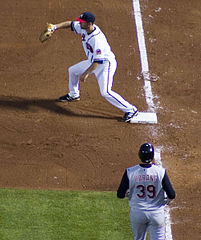
In baseball, if the batter connects with the pitch, the first baseman serves as the initial "threshold guardian". When the batter runs to first base, he has to outrun the ball before the first baseman catches it.

In screenwriting, if the writer "connects" with a compelling premise, the writer's skills represent their likelihood of getting to "first base". If a writer doesn't understand character development, story structure, or basic grammar, spelling, punctuation, and formatting, they'll never get out of the batter's box.

As a script analyst, contest judge, and coverage writer, my job resembles that of the first baseman. My tasks involve making sure that substandard scripts don't advance to the next base.

As a script consultant, I also act as a first-base coach. My job involves advising writers on how to develop their scripts, execute their timing, and improve their chances of getting the script to the next stage.

Tomorrow, we'll look at how to reach "second base": getting a manager or agent. 

This week, Story Into Screenplay is offering a professional analysis of the first ten pages of any screenplay (TV pilot, short film, or feature film) for only $10.

For more information about this offer, email storyintoscreenplayblog(at)gmail(dot)com with the subject “10 Pages for $10” or fill in the form on this page.


Tuesday, October 5, 2021

Baseball, Screenwriting, and "The Writer's Journey": The Pitch

In baseball, the pitcher stands at the center of the diamond. He strides atop a mound of dirt and hurls the ball toward the plate to start the action. The batter has a fraction of a second to determine if the pitch is a fastball or curveball, if it's close to the plate or further away, and if he should swing.

In screenwriting, coming up with the main idea starts the action. Those ideas can involve plot, characters, setting, or theme. Those concepts can cover the whole story, a vital sequence, a pivotal scene, or even a single line of dialogue.

Just as a batter waits for the best pitch to get them on base, the writer needs to determine which ideas will make for an effective story that an entire team (managers, agents, producers, directors, actors, crew members, etc.) can turn into a movie or TV pilot.

Ideas form the center of any story. Why else do you think they call the process of selling your concept "pitching"?

Unfortunately, at least in this analogy, there's no such thing as a "home run" in screenwriting. No writer can knock the ball over the fence, trot around the bases unopposed, and get the project in front of an audience on their own.

In the screenwriting game, writers have to take it one base at a time. You can't score until you make it to first base. 

That's where Story Into Screenplay comes in. We offer script analysis, one-on-one consulting, scriptwriting, and rewriting services.

Check in with us tomorrow when we'll look at how to reach first base: getting your script in the best possible shape. 

This week, Story Into Screenplay is offering a professional analysis of the first ten pages of any screenplay (TV pilot, short film, or feature film) for only $10.

To take advantage of this offer, email storyintoscreenplayblog(at)gmail(dot)com with the subject "10 Pages for $10".


Monday, October 4, 2021

Baseball, Screenwriting, and “The Writer's Journey”: Introduction

I recently received an e-mail from Ken Lee at Michael Wiese Productions, the publisher of such indispensable screenwriting books as Michael Hauge's Selling Your Story in 60 Seconds, Penny Penniston's Talk The Talk, and Blake Snyder's “Save The Cat” series.

The e-mail regarded the 25th Anniversary of Christopher Vogler's seminal work, The Writer's Journey. Later this week, I look forward to the opportunity to interview Mr. Vogler and get his thoughts on how his approach to story development has changed in the last quarter-century.

In the meantime, I'm re-reading my copy of the Second Edition of The Writer's Journey. One of the more timely aspects that I noticed involved how he illustrated the standard “hero's journey” character arc as a baseball diamond. 

With the end of the regular season and the start of the playoffs on the horizon, I thought I'd look at how to extend his illustration into a full-blown analysis of how the struggle that a screenwriter endures can parallel that of a batter rounding the bases.

As a lifelong baseball fan, seeing both my childhood team (St. Louis Cardinals) and my hometown team (Houston Astros) headed into the post-season reminds me of the incredible skill levels that baseball players possess. 

For instance, if a hitter gets a base hit three times out of every ten at-bats, the media and the fans consider that player as a star. These players spend hours in batting practice, working on their stance, and studying video of both their swing and the pitchers that they'll face.

This aspect should serve as a lesson for those aspiring writers who think that their scripts will guarantee them success. Even the best hitters analyze every aspect of their swing, so every writer should scrutinize every facet of their writing skills. If a writer develops their skills enough (or gets lucky enough) to take a swing with their script and makes contact, then the real fun begins

In The Writer's Journey, Mr. Vogler discusses the concept of "Threshold Guardians". In baseball, the pitcher, catcher, and fielders serve as the "guardians" who prevent the runner from reaching each base. In writing, the various gatekeepers guard each threshold of the process to prevent newbie writers from "scoring" a deal. 

For this week, we'll break down the process of going from a newbie writer to a produced professional by touching each “base” until we look at how to “score” in the industry with a finished feature film or TV pilot.

Visit us tomorrow, when we'll look at how to use your "batter's eye" to find a "pitch" that can help you write a "hit" script.

During this week, Story Into Screenplay is offering a professional analysis of the first ten pages of any screenplay (TV pilot, short film, or feature film) for only $10.

For more information about this offer, email storyintoscreenplayblog(at)gmail(dot)com with the subject “10 Pages for $10” or fill in the form on this page.


Thursday, August 12, 2021

One Villainous Scene – Killmonger's Museum Heist


From the people who brought you "One Marvelous Scene" and "One X-Cellent Scene" comes a new playlist just in time for the release of James Gunn's The Suicide Squad.

This joint effort, titled "One Villainous Scene", examines the best scenes with the worst villains.

Unlike previous lists, this list doesn't just limit itself to the Marvel Cinematic Universe, the X-Men franchise, or even superhero movies as a genre.

However, in sticking with the theme of my previous entries in the "One Marvelous Scene" list, I'm going back to the well to examine a scene from the most compelling film in the decade-plus history of the MCU: Black Panther.

This entry will examine the museum heist scene by using everyone's favorite tool: the VOTE Method. 

First, let's look at Killmonger's VOTE:


Victory – What does he want?

He wants to steal the vibranium ax.


Obstacles – What stands between him and his Victory?

The armed guards, the security systems, and the snooty white "expert" hover over his every move.


Tactics – What does he do to overcome the Obstacles?

He tells the expert that she's wrong about the ax's origins.

He bribes the coffee server to poison the expert and reprogram the security cameras.

He brings in Klaue to kill the guards and shatter the glass.


Energy – What emotional need gives him the Energy to pursue his Victory?

He needs to rectify the injustice of how the ax got there.

He needs to use it as an instrument to rectify the greater injustice of what happened to his father in Oakland.


Next, let's look at the museum director's VOTE:


Victory – What does she want?

She wants to show off her knowledge of the history of each relic.


Obstacles – What stands between her and her Victory?

Killmonger challenges her assumptions about the ax's origins. 

He confronts her about how the museum didn't "pay a fair price" for the artifacts.


Tactics – What does she do to overcome the Obstacles?

She summons the armed guards to throw Killmonger out of the exhibit.


Energy – What emotional need gives her the Energy to pursue her Victory?

She needs to show that her privileged education gives her more insight into these artifacts.

She needs to show that she knows more than someone who speaks and dresses the way Killmonger does.


Even in what some audiences may consider a less important scene, the VOTE Method can ensure that each character has a clear motivation.

The VOTE Method also ensures that each scene delivers a compelling conflict that keeps the audience engaged in the story.


If you want your scenes to deliver the highest possible levels of dramatic tension, then you need Story Into Screenplay.

We offer one-on-one consultations and professional script reviews from an experienced script analyst and screenplay contest judge.

We also offer full screenplay writing and rewriting services, where you get to work with an award-winning screenwriter.


Since most studio readers decide on a script within the first ten pages, Story Into Screenplay offers a special deal.

Get a professional evaluation of the first ten pages of your screenplay for only $10.


Contact Story Into Screenplay by filling out the form on this page or by emailing storyintoscreenplayblog(at)gmail(dot)com with the subject line "10 Pages for $10".

You can also send a direct message through our Facebook page.


Good luck and keep writing!


Friday, July 2, 2021

Screenwriting Advice: How Do You Want To Do This?

“The cobbler's children have no shoes.”

Have you ever been so caught up in helping other people that you've neglected your own needs?

If you have, then you know why I haven't posted anything in the last two months.

If you haven't, then let me tell you how it feels.

In recent months, I have been working with both a major film festival and a leading script service in evaluating screenplays.

For almost the last year, I've read nearly 50 scripts a month.

The educational experience of reading hundreds of scripts over the last year has served me well as a student of the craft.

However, it doesn't leave me much time to perfect my own work in that craft.

It also hasn't left me much time to focus on creating blog posts, building a client base, or helping other writers.

This dilemma brings me to the reason I come to you today, Dearest Reader.

One of main reasons I started this blog was to share my experiences as a screenwriter with other aspiring writers.

I don't claim to be a Hollywood-level writer. Like many of you, I don't have representation, I've never written for a major studio, and I'm not hanging out with movie stars or power players.

However, I've written a few good scripts, been paid for some of them, and I've received some recognition for my work.

I might not have an Oscar on my shelf, but I know enough where I believe that I can help aspiring writers turn their stories into screenplays.

Playing A Critical Role

During the pandemic and the subsequent lockdown, I discovered a YouTube show called Critical Role.

The show recently wrapped up its second “season”, a storytelling campaign that lasted for over 140 episodes stretched over 3 years.

The host and “Dungeon Master”, Matthew Mercer, describes the show as “a bunch of nerdy-ass voice actors (who) sit around and play 'Dungeons and Dragons'”.

When one of his players lands the killing blow on a fierce dragon or an evil sorcerer, he asks them a simple question:

“How do you want to do this?”

The player then improvises an account of how they envision their fatal strike landing on their formidable foes.

Mercer then acts out the scenario, much to the delight of the players and the thousands of viewers on the game's Twitch stream.

So what does a bunch of grown adults sitting around a table playing make-believe with crazy-looking dice have to do with screenwriting?

As I mentioned, my mission with this blog was to help writers turn their stories into screenplays.

Since I've read so many scripts and seen so many writers who need help, a burning question arises with the ferocity of a dragon:

“How do I want to do this?”

Here are some options:

  • Blog Posts: Posting about screenwriting tips, dealing with writing issues, and breaking down current movies.
  • Instructional Books: Compiling blog posts and my experiences as both a writer and a script evaluator into a concise and helpful book.
  • Live or Online Workshops: Presenting the VOTE Method to a group of students in a classroom or workshop setting. 
  • Video Courses: Filming, editing, and posting instructional videos. 
  • One-On-One Consultations: Working with writers one-on-one to help them develop strong characters.
  • Script Evaluations: Evaluating screenplays and providing advice on how to improve the writer's chances of getting noticed.

When it comes to slaying the monsters that keep you from writing your best screenplay, the question remains:

“How do you want to do this?”

Please send your answers to storyintoscreenplayblog(at)gmail(dot)com or in a direct message through the Story Into Screenplay Facebook page.

Enjoy your holiday weekend!


Monday, April 19, 2021

Screenwriting Advice: The Value of Leftovers

 "Our older brother took all the cool toys, and then we got left with ... peg-warmers."

- Dave Filoni, Co-Executive Producer, The Mandalorian

In my "day jobs" as a script analyst and screenplay contest judge, one of the mistakes I see writers make most often with their characterization occurs when they put all their story "eggs" in the protagonist's "basket".

These writers invest all of their efforts into developing every aspect of the protagonist, from their motivations, to their ancestry, to their favorite pizza toppings.

However, when they spend all of that energy on the protagonist, they often don't have any left to develop the script's supporting characters.

This lack of focus leads to these supporting roles functioning solely as part of the protagonist's journey rather than as fully-developed characters.

In these scripts, the supporting characters often serve as simply the "best friend", the "love interest", the "evil boss", or the "nagging mother", and often fail to attract the audience's interest.

In some cases, enterprising writers have taken lesser-known characters from another story and turned them into compelling protagonists in their own stories.

One of the best-known examples of this approach to characterization appears in the Tom Stoppard play Rosencrantz and Guildenstern Are Dead. 

It only took about 300 years, but these supporting characters from Hamlet finally got their due as protagonists in their own story. 

Instead of getting trapped into their Prince's tragedy, these Danish dimwits get sucked into an absurdist world where "all the world's a stage" and they are merely players.


The same idea applies to the hit Disney+ series The Mandalorian.

While much of the world lost their minds over "Baby Yoda", the producers had the idea to place lesser-known characters at the center of the action.

As Co-Executive Producer Dave Filoni said in an interview, “Our older brother took all the cool toys, and then we got left with Ugnaughts and Jawas and peg-warmers, but somehow we got a Boba Fett figure, and then we painted him silver and made him cooler, ‘cause sometimes you make it your own.” (emphasis mine)

The most prevalent example of the power of "leftovers", in terms of both box-office receipts and wider cultural impact, is the Marvel Cinematic Universe.

By the early 2000s, Marvel Comics was emerging from near-bankruptcy. A major source of revenue that the company used to get back on its feet came from selling off the film rights to many of their iconic characters, including Spider-Man, the X-Men, and the Fantastic Four.

When they tried to launch their own movie studio, they didn't have the rights to their most famous names, so they had to start with a "leftover" character: an alcoholic, Cold-War-relic, Howard Hughes-style munitions manufacturer who was "not the hero type."

From there, they added more "leftovers" to the recipe:

  • An idealistic World War II soldier wakes up after a 70-year nap.
  • An over-muscled spoiled brat gets kicked out of his dad's house.
  • A nerdy scientist develops severe anger management issues.
  • A Russian spy must face the "red in her ledger".
  • An assassin still uses a bow and arrow in the 21st Century.
  • A three-foot-tall talking raccoon has a gun fetish.
  • An eight-foot-tall walking tree says the same three words over and over again.
  • A desperate thief steals a suit that can make him shrink to the size of an ant.
  • A grief-stricken woman creates an entire town based on classic TV sitcoms.

You don't even need to dig through a Shakespeare collection or visit a comic book store to find another "leftover" character who took the world by storm. 

Just open your wallet and find a $10 bill.

How does a "bastard, orphan, son of a whore and a Scotsman" become the source of the biggest sensation on Broadway in the last 20 years? 

Because a writer saw potential in a "leftover" character and made him a compelling protagonist. 

Writers should give their supporting characters a VOTE, just like their lead characters.

Because if you don't develop your supporting characters …

… someone else will.


Speaking of a $10 bill, Story Into Screenplay will evaluate the first ten pages of your feature screenplay or TV pilot script for just $10.

Story Into Screenplay will grade your pages based on criteria such as 

  • Formatting
  • Structure
  • Concept
  • Character Development
  • Plot
  • Dialogue
  • Entertainment Value
  • Logic
  • Action/Pacing
  • Spelling/Grammar
  • Research

Most studio readers and contest judges evaluate a script based on the first three to five pages. 

If your first few pages can captivate a reader, then your chances of success go up astronomically.

Story Into Screenplay also offers a FREE one-on-one consultation for writers who take advantage of this special offer.

To find out more about the "10 Pages for $10" special, as well as the other services Story Into Screenplay offers, fill in the form on the side of this page, or send a direct email to storyintoscreenplayblog[at]gmail[dot]com.

You can also send a direct message to the Story Into Screenplay Facebook page.

Good luck! 

Keep writing!


Monday, March 8, 2021

SAVE THE LANDMARK RIVER OAKS!

Whether you've written one screenplay or a hundred, whether you prefer watching movies in a theatre or streaming at home, whether you've focused your career on writing for features or writing for TV, every screenwriter should concern themselves with the potential closure of a classic movie theater.

In Houston, the Landmark River Oaks (LRO) Theater has hosted screenings ranging from "Casablanca" to "Yellow Submarine" to "The Blair Witch Project". The theater has also hosted hundreds of midnight screenings, including the infamous "Rocky Horror Picture Show".

The theater's landlords have not offered the site a new lease and are threatening to shut it down at the end of March. When protesters gathered outside the theater to support the venue, the landlord posted signs that protesters would face prosecution as trespassers ... on a public sidewalk.

For more details, check out the full story.

As many communities across the country face (or have faced) the closure of beloved "art house" theaters, I thought I'd share this letter I sent to the Houston Mayor, the Houston City Council member in whose district the LRO resides, and the two top of executives of the LRO's property management company.

This issue doesn't just affect a neighborhood in Houston, Texas. It affects anyone who wants to get their story told on a screen, including screenwriters, directors, producers, actors, and crew members. As these venues die off, so do your opportunities to have an audience see your work.

This isn't just my fight. It isn't just Houston's fight.

It's a fight for all of us.


=======

pmanchi@weingarten.com, mayor@houstontx.gov, james.koski@houstontx.gov, districtC@houstontx.gov, Julia.Retta@houstontx.gov, landmark.theatres.publicity@gmail.com

Subject: Protect the River Oaks Theatre!

Dear Mayor Turner, Council Member Kamin, Mr. Alexander, Mr. Manchi, and to whom else it may concern:

I am writing to you today to ask for your help in maintaining an essential component of Houston's artistic and cultural history: the Landmark River Oaks Theatre (LRO).

As a long-time patron who has attended both first-run and revival screenings of some of the most important films in recent years, from "The Blair Witch Project" to "Yellow Submarine", I can speak first-hand about the importance of the LRO to the cultural and social community in a city largely deprived of such outlets.

As a screenwriter and aspiring filmmaker, I have also attended screenings of films made in Houston, by Houstonians, and for a Houston audience at LRO, which provides a venue for a vital part of Houston's filmmaking and artistic community.

As I'm sure you've all seen in recent weeks and months, Houston and Texas have suffered several "black eyes" in the national media, from the power outages attributed to the historic winter storm, to the Governor's rescinding of the mask mandates and other protective measures to prevent the spread of the Coronavirus, to the continuing exodus of the city's top professional athletes.

In the light of so many losses, powerful individuals such as yourselves must ask yourselves some uncomfortable questions:

  • Can Houston really withstand the loss of one of its few remaining cultural icons?
  • Will one more high-end retail outlet on a street full of them really make a long-lasting difference in a community starving for an outlet for cultural expression?
  • Is the placement of another retail tenant in the same location worth all the bad press that tearing down the LRO would bring?


This crisis also forces public officials, such as Mayor Turner and Council Member Kamin, to answer some deep questions:

  • Are you willing to stand with policies that seek to limit First Amendment rights, such as free speech, free access to public property, and the right to protest?
  • Do you and the city value profits over people, as many critics suggest?
  • If a valuable asset like LRO closes, how does that make Houston (and you) look to the rest of the nation?


If all of you feel that shutting down a cultural icon like LRO is best for both the city and the bottom line, there's nothing that we ordinary Houstonians (even one who's an award-winning screenwriter) can do to stop you.

If all of you place so little value, not only on the historical importance of such an asset, but also on the future value that won't appear in an investor's report, that such an asset can bring, we poor plebeians (who can't afford the lofty prices that the new tenant will bring) are powerless to stand in your way.

If all of you value dollars over diversity, commerce over community, and white-washed walls over multi-colored neon, then far be it from us mere mortals to stand in the way of such glorious "progress".

As we all know, the financial impacts from the Coronavirus have spread across numerous industries, and none quite as hard as the entertainment industry. This letter does not seek to deny these facts.

As we also know, if the impact of this year of isolation has taught us anything, some things are more important than money.

I know this.

You know this, Mayor Turner.

You know this, Council Member Kamin.

You know this, Mr. Alexander.

You know this, Mr. Manchi.

Now for another uncomfortable question:

What are we all going to do about it?

Numerous members of the Houston artistic community have written emails, launched protests, and raised awareness of the issue on both conventional and social media.

I've done some of what I can with this letter. If possible, I'll do what I can in person by joining the legal and public protests.

What are you going to do about it, Mayor Turner?

What are you going to do about it, Council Member Kamin?

What are you going to do about it, Mr. Alexander?

What are you going to do about it, Mr. Manchi?

Once this crisis has passed and the LRO reopens under a new lease, I hope to see all of you at a future screening. 

Popcorn's on me.

Thank you.

Gerald Hanks

Council District C