Gerald Hanks Filmography

Tuesday, February 25, 2020

Screenwriting with the VOTE Method: Getting Emotional

One of the difficulties that rookie writers encounter when using the VOTE Method comes when they try to differentiate the character's Victory from the Emotion that drives them to pursue it.

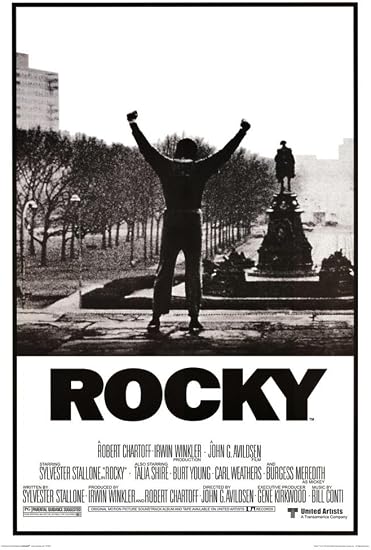
In the original Rocky, Rocky states his Victory - to stay on his feet for fifteen rounds against heavyweight champion Apollo Creed.

The Emotion that drives him is his need to prove himself worthy of love and respect, especially from Adrian.

In 1917, Corporal Blake's Victory is to deliver the General's orders before the attack starts.

The Emotion that drives him is his need to save his brother from dying in a doomed attack.

Lists of Emotional Needs

If you're having trouble finding the Emotion that drives your character, several experts on human behavior have compiled lists from which you can choose the need that fits your character.

In 1943, psychologist A.H. Maslow introduced a "hierarchy of human needs" in his paper, "A Theory Of Human Motivation".

Maslow's Nine Needs, in decreasing order of importance, are:

  • Security
  • Autonomy
  • Attention
  • Emotional Connection
  • Community
  • Privacy
  • Sense of Self
  • Sense of Achievement
  • Meaning

Maslow's hierarchy breaks these and other needs into five categories, also in decreasing order of importance.

  • Physiological
  • Safety
  • Love and belonging
  • Esteem
  • Self-actualization

Motivational speaker Tony Robbins listed six core human needs:

  • Certainty
  • Variety
  • Significance
  • Connection
  • Contribution
  • Growth


The deeper the Emotional need, the deeper the connection to the audience will be.

Audiences can relate to a character in search of food or water on a more immediate level than one looking for intellectual insight.

Victory vs Emotion

Here are some ways that you can find the difference between your characters Victory and their Emotional need.


  • The Victory is unique and personal. The Emotion is universal.
  • The Victory is the "what" of the story. The Emotion is the "why".
  • The Victory is the destination. The Emotion is the fuel for the journey.
  • The Victory shows the audience what they can expect to see. The Emotion shows the audience what they can expect to feel.


Since these needs are universal, they can apply to any type of character - any nationality, any gender, any species, from any time, any planet, or any mythical realm.

Delivering On Emotion

Your primary mission as a storyteller is not to deliver a message.
It is not to present a point of view.
It's not to teach or preach.

Your main Victory is to provoke an emotional response in your audience.

When you find the Emotional needs of your characters, you'll find the emotions you want to provoke in your audience.

Contact Story Into Screenplay

If you need help with character development, plot structure, or any other aspect of screenwriting, contact Story Into Screenplay.

Story Into Screenplay offers one-on-one consultations, coverage reports, script writing and rewriting services, and professional screenwriting advice.

You can reach us by filling in the email form on this page, by sending a direct message through our Facebook page, or by emailing us directly at storyintoscreenplayblog [at] gmail [dot] com.

Monday, February 10, 2020

Post-Oscars Advice for Screenwriters: Embrace The Suck

Many aspiring screenwriters watched last night's Academy Award ceremonies.

They imagined themselves standing on that stage, in front of hundreds of industry leaders and millions of viewers around the world.

They dreamt of thanking the Academy, their agent, their family, and their writer's group as they held the Little Gold Man.

For nearly everyone reading this, and for Your Humble Author, watching and dreaming will be as close as they ever get to that moment.

When the ceremony ends and the after-party winds down, these dreamers must face the harsh light of reality.

When the dreamers realize that they'll never achieve those levels of fame and fortune, they'll start making excuses.

"I don't write scripts for 'Hollywood'."

"All they want are comic book movies and brainless big-budget action scripts. My intimate little family drama doesn't stand a chance of getting made."

"Success in screenwriting is about who you know, not what you know."

All of these excuses show an unwillingness to engage in the work that a real career requires.

Not a dream. Not a fantasy. Not a lottery ticket. A career.

If you want to achieve "success" in any field, especially screenwriting, you need to remember this:

"Success" starts with "Suck".

Your ideas will suck.

Your characters will suck.

Your scripts will suck.

Your first drafts will absolutely suck.

The amount of rejection you'll encounter will definitely suck.

The only way to achieve "success" is to embrace the "suck".

If you've been applying the VOTE Method to your scripts, you know that your characters must persevere through numerous Obstacles and apply different Tactics to achieve their Victory and fulfill their Emotional need.

(Victory. Obstacles. Tactics. Emotion. Get it?)

Why should it be any different for you as a writer?

If you want to lose weight, you have to learn to embrace "rabbit food" and early morning workouts, both of which suck.

If you want to stop bad habits, such as smoking or excessive drinking, you have to learn to embrace the cravings for those things and ride through them, which can truly suck.

If you really want to be a screenwriter, you have to embrace the putrid first draft, the thin-as-water characters, the inane dialogue, and the nonsensical plot machinations and work to improve them.

Let's face it. Rewriting sucks. It's not nearly as fun as the first draft, when you get to discover your story, your world, and your characters.

As much as it sucks, rewriting is also a vital part of creating a story that engages an audience other than yourself.

The "suck" of rewriting lets you see your story with fresh eyes. It lets you learn how to create more tension, how to drive the story forward, and how to make your characters more engaging to the reader.

When you have your heart set on achieving a goal, one action you can take to make the process easier is to seek out professional help.

If you want to lose weight, you can work with your doctor, a personal trainer, and a nutritionist.

If you want to quit bad habits, you can work with a professional counselor who can give you advice on how to manage your cravings.

If you want to make more money, you can work with a financial professional on how to save, invest, and channel your income.

If you want to write a professional-level screenplay, you can work with a professional writer to coach you through the process.

At Story Into Screenplay, we offer professional script consulting, script coverage reports, screenplay adaptations, and more.

We'll work with you to develop a script that has the main element that agents, actors, and audiences look for: strong, powerful characters with clear motivations and high-stakes conflicts.

While we can't guarantee you an Oscar, we can help to make your road to "success" suck less.

You can contact Story Into Screenplay by using the form on this page, or by emailing StoryIntoScreenplayBlog[at]gmail[dot]com.

You can also send a direct message through our Facebook page.

Let's get your script in Oscar shape!

Tuesday, December 31, 2019

Screenwriting with the VOTE Method: Creating Loglines

Quick Update: The reason that this blog has been dormant for the last few months is that I recently completed another commissioned feature screenplay.

I've been working closely with the client for several months and I delivered my final draft earlier this month.

The story is based on the producer's family, so she really wants to get it made.

I've also been working on a book based on the lessons I've learned using the VOTE Method.

This entry is part of a chapter that should appear in the book when it's ready, so consider this a sneak preview.

If you've read my posts on the VOTE Method, you'll see how you can use this simple tool to create strong characters and powerful stories.

If you haven't, then you should know that VOTE stands for:
  • Victory - what the character wants
  • Obstacles - what stands between the character and the Victory
  • Tactics - what the character does to overcome the Obstacles and achieve the Victory
  • Emotion - what emotional need the character believes the Victory will fulfill

Another useful aspect of the VOTE Method is that it lets you create an indispensable part of marketing your script: the logline.

The logline summarizes who your main character is, what that character wants, what they must overcome, how they'll do it, and why they need to do it.

The formula can look something like this:

[Protagonist] [uses Tactics] against [Obstacles] to [achieve Victory] so that they can [fulfill Emotional Need].


Using this formula for Rocky gives a logline that looks like this.

[An underachieving boxer] [uses unconventional training methods] against [the World Heavyweight Champion] to [last for fifteen rounds] so that he can [win the love of a young woman].


For Spider-Man: Into the Spider-Verse, the logline might look like this:

[A teenager with spider-powers] [teams up with heroes from alternate universes] against [a squad of super-villains] to [save New York City] so that he can [learn what it takes to be a hero].

You can also rearrange the order to fit your story, just as long as you include every element.

By Source, Fair use,
https://en.wikipedia.org/w/index.php?curid=60200838

For the comedy Booksmart, the logline might look like this:

[Two best friends] [use their "booksmarts"] to [find the biggest graduation party] [before the night is over] so that they can [have one last good time together].

When you work with this formula, you can create compelling loglines that can get readers, agents, and actors to say those three magic words:

"Tell me more."

If you want to find out more about how to create impactful loglines, strong characters, and powerful scripts, let Story Into Screenplay help.

Story Into Screenplay offers script writing services, coverage reports, and one-on-one consulting.

Start your new year off with a great script!

Send your questions to storyintoscreenplayblog[at]gmail[dot]com, or Like Story Into Screenplay on Facebook and send a DM.


Happy New Year and Keep Writing!

Thursday, September 12, 2019

Screenwriting: Finding Your Niche

Many rookie writers make the mistake of writing “for the market”. These aspiring scribes believe that the best ways to get their scripts converted from page to screen involve either appealing to the widest possible audience, or chasing trends found in recent script sales or current box office hits.

For writers seeking to get films made, a more effective approach often involves focusing on a specific niche audience.

The biggest reasons that rookie writers should focus on a niche audience come down to economics:

  • Films for niche audiences are often less expensive to produce. Small, focused stories can ease the burdens on producers, who must assemble the money, talent, equipment, and expertise to get your script made.
  • Fans of niche film genres will often go out of their way to see films in their favorite genre, giving producers a built-in audience that they can count on to purchase the final product.
  • Niche audiences are always demanding new material. Films for niche audiences often have an appeal that lasts longer than just a few weeks after its initial release.
  • Films for niche audiences are often profitable. Film is a business. Businesses live on profit. Revenue minus cost equals profit. High ticket sales and low production costs equals a profitable niche. In this economic structure, many writers can make a good living by writing scripts for a niche audience.


Niche vs. Genre

Just to clarify these terms, niche refers to the audience, while genre refers to the tropes used to tell specific types of stories. Niche audiences often flock to films in their favorite genre because they recognize and appreciate the genre storytelling tropes.

Here are some genres that typically appeal to niche audiences.

  • Horror / Crime / Thriller. Writer/ directors from Sam Raimi to Guillermo del Toro got their start in low-budget horror films. Quentin Tarantino and Robert Rodriguez cut their teeth on low-cost shoot-'em-ups. Writers can also focus on thriller/suspense stories, without the need for a blood bath, either on screen or on the books.
  • Faith / Family Friendly. On the other end of the spectrum, films that focus on faith and family are often inexpensive to produce and have a ready-made audience. Films with a holiday theme, such as summer vacation, Thanksgiving or Christmas, are often annual favorites and can attract audiences across generations.
  • Stories for Under-Served Audiences. Stories that focus on audiences that don't often see themselves on megaplex screens can not only bring attention to your story, they can also attract talented actors and directors in those groups who are hungry for more substantial roles. Scripts that feature strong characters who happen to be women, ethnic minorities, LGBT+, physically or mentally challenged, or other under-served groups can draw audiences.

On the flip side, there are also some genres that rookie writers may be better off avoiding:

  • Historical Pieces. From clothes to hair to music to cars, historical pieces are often more difficult and more expensive to produce. If you can find any way to bring your story into the present day, you increase your chances of getting your script made.
  • Ensemble Pieces. In Old Hollywood, “A Cast of Thousands” was a sign of a prestige picture. Today, a script with a large cast is the sign that the writer lacks focus. A script that focuses on a single protagonist, a single antagonist, and a handful of supporting characters not only forces the writer to keep the story tight, it also shows producers that the writer understands the limitations involved in low-budget productions. 
  • Sci-fi /Superhero. One of the big reasons that sci-fi and superhero films are successful today as if they have audiences that have followed the characters and storylines from other media, such as novels, comic books, or TV shows. Inexperienced writers who try to push their original sci-fi or superhero concepts face an uphill battle. Not only do their stories lack that built-in audience, but also the financial and technical requirements involved in producing a high-quality film in the genre can be cost-prohibitive to getting the script made.

Remember, your end goal as a screenwriter is NOT to win screenwriting contests.

It's NOT to get rave reviews from your friends or your writers’ group.

It's NOT to earn grants.

It’s NOT to get a “RECOMMEND” rating on a coverage report written by a studio intern.

It's NOT even to get an agent or manager.

All of these are means toward the true end goal.

Your end goal should be to write a script that gets you PAID and gets a movie MADE.

Whether you’re writing for a niche audience, or your penning a screenplay for the masses, Story Into Screenplay can help. Story Into Screenplay offers one-on-one consultations, coverage reports, and script writing and rewriting services.

For more information, email Story Into Screenplay on the form on this page or at storyintoscreenplayblog at gmail.com. You can also reach Story Into Screenplay at our Facebook page.

Good luck and keep writing!

Wednesday, August 14, 2019

Setting Up Your Story World Through Conflict and Character

One of the major problems that many rookie writers, especially those whose stories take place outside of contemporary Western settings, is the need to explain how characters function within the laws, customs, and traditions of the story’s setting. From ancient empires to far-flung future societies, settings place specific limits on characters.

The approach most rookie writers take is to have their characters explain the rules to the audience in an “info-dump”, a stretch of expository dialogue that bores the audience to tears, deflates any dramatic tension these scenes could have, and prevents the story from moving forward.

A more character-driven approach to the “As you know, Bob” speech is to create characters that are on opposite sides of the societal divide. One character is in charge of enforcing society’s rules, while the other must break those rules to pursue their Victory.


In Les Miserables, the audience doesn’t need to know all of the intricacies of the political landscape in France in the late Eighteenth and early Nineteenth Centuries. All the audience needs to know is that Jean Valjean is a desperate ex-convict on the run and Inspector Javert is the driven police officer whose mission it is to bring him in. All the societal, cultural, and political aspects become background noise for the core story.

Moving from the past to the far future, the appeal of most science fiction shows arises less from the whiz-bang technology they show or the utopian societies they propose, but from the characters that must cope with their settings.


In the original Star Trek series, Captain Kirk often breaks the rules (both those established by Starfleet and those imposed by the “laws of physics”) to accomplish his mission and save his crewmates. On the other side, Commander Spock attempts to follow logical reasoning and to stay within the rules as much as possible.

By this method, the audience only learns about the rules of how the technology works and how the Federation deals with different societies through the conflict between Kirk, Spock, and the other characters. The audience doesn’t need a lecture on warp drive or transporters to enjoy the show: the conflicts between the characters will show what they can and can’t do given the rules of their universe.

But what if you’re not writing about the past or the future? What if you’re just sticking to the here and now? These methods can still apply. Each group has its own set of rules. Some members are in charge of enforcing those rules, while others are on the outside looking in. These rules are the source of your conflict, which becomes the fuel that drives your story.


In Mean Girls, Regina George is the queen of the school: she makes the rules about who gets to be popular and who doesn’t. When Cady Heron arrives, she gets a crash course in these rules, first by befriending the outsiders, then by working her way into the Plastics. Again, the audience doesn’t need a lengthy explanation as to how someone becomes a “Plastic”. The conflict between Cady and Regina shows them how the rules work, and how Cady uses them to bring Regina down.

Most aspiring writers have been told “Show, Don’t Tell,” but have never known exactly how to implement that adage into their storytelling. By using the characters to establish the setting, instead of the other way around, writers can show their world to the audience through their characters’ eyes, rather than through their words.

If you need help with your script, get in touch with Story Into Screenplay. We offer coverage reports, rewrite services, and one-on-one consultations. You can reach us through the email form on this page, or send us a message on our Facebook page.


Sunday, July 28, 2019

What’s Your Point? Screenwriting and Emotion


When I work with rookie screenwriters, one of the biggest issues I encounter is that they fail to see the point of their story.

They’re fascinated by plot and theme and setting and, occasionally, even character, but they often miss the point.

Here’s a question that illustrates my argument:

Why do you tell a joke?

Do you want your audience to nod in solemn agreement, validate your point, and praise you for your wit and intelligence?

I hope not.

You tell a joke to get a laugh. That’s the point of a joke.

The point of a wacky comedy script is to get the audience to laugh.

The point of a family tragedy script is to get the audience to cry.

The point of a gruesome horror script is to get the audience to hide their eyes in terror.

What do all of these have in common?

They’re all emotional responses.

Story Into Screenplay’s Fundamental Theorem of Story (™ PENDING): The point of any story is to provoke an emotional response in the audience.

Not to teach a lesson. Not to make a statement. Not to show how smart or sophisticated or skilled you are as a writer.

Your job, first and foremost, is to provoke an emotional response in your audience.

If your story does not provoke an emotional response in the audience, YOU HAVE NO STORY!

You may have a sequence of events or a narrative, but you don’t have a STORY.

The VOTE Method can be highly effective at helping writers find the emotional response that they want to get from the audience. The E in VOTE can also stand for “Emotion”. The E answers the question, “What is the Emotional need the character needs to satisfy as they pursue their Victory, overcome their Obstacles, and apply their Tactics?”

While the first three elements are unique to the character, setting, and story, the Emotion should be something that everyone in the audience can understand.

Love. Revenge. Grief. Fear. Redemption. Validation.

These are all emotional needs that everyone feels at one time or another.

These are all examples of the types of emotional needs that you need your characters to pursue.

These can all be examples of the emotional responses that you need to evoke from your audience to make your story a success.

You can even apply this theorem in a specific scene.

In this scene from Inside Out, the writers knew the emotional response they wanted from their audience: they wanted them to mourn the death of Bing Bong.

How did they get the audience to mourn a character who was, up to that point, annoying, useless, and more of a hindrance than a helper?

They built up the audience’s hope through Joy, the sunniest character in the film. They showed the near-misses that Joy and Bing Bong had as they tried to escape. Then they showed the only possible solution: Bing Bong’s sacrifice.

When Joy escapes the pit, she starts out happy. When she sees Bing Bong still in the pit, she realizes that her escape came at a cost. When Bing Bong waves goodbye and tells Joy, “Take her to the moon for me”, as he disappears, Joy (and the audience) tear up at the loss.

Before you sit down to outline your script, think of your audience.

What emotion do you want the reader to feel when they get to “FADE OUT”?

What do you want the audience to feel when the end credits roll?

What do you want them to tell their friends about their emotional experience after going through your story?

When you can answer these questions, then you just might have a story worth telling.

If you need help finding these answers, contact Story Into Screenplay. We offer coverage reports, script consultations, rewrite services, and much more.

To find out more about how Story Into Screenplay can help you, please fill out the form on this page, email us at storyintoscreenplayblog(at)gmail(dot)com, or send a message through our Facebook page.


Wednesday, June 26, 2019

Product Review: SmartPhone Movie Maker

One of the aspects of screenwriting that new writers, especially those transitioning from other types of writing, is that screenwriting is, first and foremost, a visual medium. While the emphasis on characterization and story structure cannot be under-emphasized, the purpose of a screenplay is as a blueprint for making a film, not as an example of literary writing.

With this in mind, one of the ways in which screenwriters can better understand what it takes to turn their script into a film is to learn about the other aspects of film making. On a recent trip to a used bookstore, I found “Smart Phone Movie Maker” by Bryan Michael Stoller. Although the box contains a film making kit designed for grade-school children, it also contains useful information for adults who want to learn more about the technical aspects of screenwriting.

The package comes in four major parts:
  • A box that can be assembled into a mini-projector
  • Accessories, including popcorn boxes and tickets.
  • A 48-page book on the film making process
  • A book of storyboarding templates

The projector box may be more suited for a child’s bedroom than for a living room, since the smaller box and shorter lens tube lack the focal length needed for large-screen projection. The kit requires that the phones be less than 78mm (about 3 inches) wide, so larger smartphones won’t work with it.

Also, users have to reset their phone screen to landscape, both upside-down and mirror-image, to ensure the proper picture orientation when projected. This often requires downloading a separate app to get the right orientation. Kids can also put together the stenciled accessories to create their popcorn boxes and tickets to their “premiere” event.

For adults, the key components are the two books. The main book includes some important ideas that screenwriters should keep in mind.

In the section on genre, Stoller writes, “Make the kind of film you like watching.”  For writers working on spec scripts, this advice often goes unheeded, as they seek to chase market trends rather than write something that captures their interests.

With the amount of work that goes into crafting a workable screenplay, any writer who works on a spec script that doesn’t pique their interest is wasting their time and talent. After all, if the writer doesn’t like the story, how will they convince anyone else to invest in it?

Another valuable piece of advice comes in the section “Beginnings and Endings”. In the “Hints and Tips” section, Stoller writes, “Write less rather than more...Ask yourself: ‘What does my character want? And why can’t he get it?’”

In other words:

  • What Victory does your character want to achieve? 
  • What Obstacles are standing between them and their Victory? 
  • What Tactics will they use to get around the Obstacles and achieve the Victory? 
  • What Emotional need is driving them to pursue that Victory?
If only there was a simple mnemonic device to help writers remember all of these questions.

For those writers adventurous enough to shoot their own films with their phones, the book also offers some sound technical advice, including proper lighting techniques, sound equipment, and camera tricks. The book also includes resources to find post-production tools, such as music, sound effects, and color correction.

Since film is a visual medium, another key aspect of screenwriting involves visualizing each scene as you write it. At this point, the book of storyboard templates in this kit can be a valuable tool.

While most spec script gurus recommend against specifying camera angles in the script itself, using the storyboard templates can give writers a sense of the images they want to convey.

For instance, the storyboard shows a close-up of Bob shading his eyes with his hand, while the script can read, “Bob shades his eyes against the setting sun.” The writer never needs to mention “CLOSE UP” in the script.

The days of the lonely screenwriter, sitting in a coffee shop, and pecking away at a laptop in hopes of selling a million-dollar screenplay are all but dead. Instead, producers and agents want to see how a writer’s vision can translate into a finished product.

In my case, I had a lot of help from some talented people who assembled my scripts into short films. These films showed clients that, not only could I write a quality script under a tight deadline, but that I had people who believed in my skills enough to invest their own time and money into my talents.

When you make your own film, whether it’s by yourself with your phone, with a handful of friends in your backyard, or with a cast and crew of thousands, you can show those decision-makers that your vision, your talent, and your creativity and worth their time and money.

If you’re ready to turn your idea into a script, Story Into Screenplay can help. We offer script consultations, coverage reports, and rewriting services for scripts in all genres and at all stages.

For more information, contact Story Into Screenplay at storyintoscreenplayblog(at)gmail(dot)com, fill out the form on this page, or send us a message through our Facebook page.