As a way to start out the new year, I thought I’d try a little experiment. Since Sony released the screenplay for Spider-Man: Into The Spider-Verse, I thought I’d show everyone what a professional coverage report should look like.
I’m treating this script as a reader would any spec script submitted to an agent or contest, instead of a work-for-hire from a major studio on a major property. This report is also a critique of the script, not of the finished film. Since this is a review of the full screenplay, this entry will contain MAJOR SPOILERS for the film.
(Full disclosure: I saw the film and, as a lifelong comic book fan, I thoroughly enjoyed it and highly recommend that everyone see it.)
Hopefully, this will give you an idea as to what kind of feedback to expect when you submit your screenplay for coverage.
If you’d like a report like this for your screenplay, contact us at storyintoscreenplayblog (at) gmail (dot) com, or fill out the form on this page, or send a message through our Facebook page.
For someone who never wrote a produced screenplay, or directed a single scene, and only appeared in films through his famous cameos, the late Stan Lee made an undeniable impact on screenwriting as we know it today.
In his 2011 book, Stan Lee's How To Write Comics, Lee put forth several useful pieces of advice for writers in any format, and in any genre. In memory of his tremendous legacy to creative writing, this entry will present “Stan Lee's Top 10 Tips for Writers” from page 54 of his book (emphasis mine).
“1. Write about things you know. If you don't know, Google the stuff and start learning. Or else be so vague but no one can pin you down -- like when I dreamed up Bruce Banner becoming the Hulk do to a gamma bomb. I don't know any more about gamma bombs than I do about brain surgery, but I didn't try to explain how it worked. I just said that he became the Hulk because of gamma radiation. Hey, who can find fault with that? At least it sounds scientific. So, to summarize - be totally factual, or else be so vague that you can get away with knowing nothing about your subject. But whatever you do, don't try to fake it.
“2. When you’re reading a comic book, or watching a movie or TV show, don't just get caught up in the story and sit there like a couch potato. Try to analyze everything that's on the page or screen.
Why did the writer add that did a dialogue?
Was it more dramatic for the hero to say nothing in that particular scene?
Why didn't the writer introduce that important story element until 15 minutes into the film, or until 5 pages into the story?
Why did (or didn't) the writer have such an enigmatic ending?
Why, in that movie, was Act Three so much shorter than Act Two?
Why, in that comic book, did the writer use so many captions on pages 3 and 4 and no captions at all on the next six pages?
Why so many long shots or close-ups?
Would it have been more interesting the other way around?
You should be able to learn something new about writing every time you read a comic or watch a film -- if you remember to analyze everything you see.
“3. Keep writing. I figure writing is like any other activity -- like swimming or jogging or sex. The more you do, the more you enjoy it, the easier it becomes, and the more you improve. If you find yourself getting bored writing, or tired of it, there's only one answer: Find another career.
“4. Write about things that interest you. If you write about subjects that for you, thinking that's what the market wants, you'll just end up writing boring pages. The more interested you are in your subject, the better chance you have of making the subject more interesting, too.
“5. Try to write at the same time every day. Writing can be a habit, like anything else. If you stick to a schedule, it makes it easier to turn pages out like a pro.
“6. Stop writing if you find yourself getting tired or bored. Take a nap or short walk to wake yourself up. You can only do your best writing when you're mentally alert and interested in what you're doing.
“7. When you finish with your script, proofread it carefully. Don't read it as if it's your baby and you love every word of it. Pretend you’re the world's toughest editor, looking for every fault you can find in story structure, dialogue, characterization, and motivation. Be as tough on yourself as humanly possible, because that's how your editor will be. And keep rewriting until your script is as good as you can possibly make it.
“8. In writing dialogue, try to give every character a different way of speaking. In any script, it's boring to have the characters all speaking the same way. Think of people you know -- how they speak, their verbal idiosyncrasies and mannerisms. Remember, nobody speaks exactly the same as anyone else. When listening to people conversing, train yourself to pick up all the subtle nuances of dialogue and use those varied nuances in your writing.
“9. Make your characters interesting. Sounds obvious, doesn't it? Well, failing to do that is one of the main reasons so many scripts are rejected. Reading a script is like visiting people - the people in the story. You wouldn't want to visit dull, colorless people, would you? You wouldn't want to spend time with bores. The characters you write about must be interesting, colorful, and unique in some special way. They must have problems we’ll care about -- and solutions to those problems that we can't wait to see.
“10. Don't get discouraged! Lots of really good, successful writers didn't make their first sale until long after they started writing. Of course, if you've been unable to sell anything for years and years and are now starving and homeless, you might start thinking of another vocation. but short of that, stay at it -- tomorrow may be your lucky day!”
Following these tips may not guarantee you a career as successful and as prolific as Stan Lee's, but it's all still sound advice, nonetheless.
For anyone who has ever picked up a comic book, bought a ticket to a movie, or watched a Marvel TV show, we all owe a debt to Stan Lee. The best way that we can repay that debt is to follow his advice and create our own universes of amazing, spectacular, incredible characters.
Excelsior!
===
If you're looking for help in creating your own universe of characters, Story Into Screenplay can help. We offer coverage reports, script consultation, and rewrite services for aspiring writers in all genres. you can reach us at storyintoscreenplayblog [at] gmail [dot] com, or you can message us through our Facebook page.
The musical biopic Bohemian
Rhapsody is based on the career of the groundbreaking British rock
group Queen and its charismatic yet troubled lead singer, Freddie
Mercury (Rami Malek). The script for Rhapsody,written by Anthony McCarten and based on a story by McCarten and co-writer Peter Morgan, traces the group's ascent from
London pub regulars to the heights of musical stardom.
In this post, we'll look at how
McCarten created strong characters by examining the story through the
lens of the VOTE Method. The point of this analysis is not to
criticize the film or the real-life people depicted in it, but to show
aspiring writers how they can create memorable characters in their
own stories by applying the VOTE Method to contemporary films.
In this case, we'll look at how McCarten approached writing the character of Freddie Mercury, as well as that of Mercury's companion and manager, Paul Prenter (Allen Leech), who the script casts as the antagonist.
THIS REVIEW CONTAINS SPOILERS
Freddie Mercury (protagonist) Victory:
Freddie's Victory is to be a rich and famous singer.
Obstacles: Many of
Freddie's Obstacles come from his background: he's not a native
Englishman (his co-workers target him with the slur “Paki”), his
parents are conservative members of the Zoroastrian religion, and his
noticeable overbite make him the target of teasing, even from his
eventual bandmates, which exacerbate his shyness.
His internal issues at dealing with his
sexuality also hinder him from pursuing his Victory, as well as
hindering his relationship to his girlfriend, Mary Austin (Lucy
Boynton). Later in the film, he must also deal with the Obstacle of
his failing health as he reunites with his bandmates in time for the
Live Aid concert.
Tactics: Freddie's main
set of Tactics include combating his shyness by going “over the
top” in nearly every aspect of his personal and professional life,
from including “the operatic section” in the title song, to his
reckless sexual behavior, to throwing lavish parties with all the
“freaks” he can find to show up.
Energy: Freddie gets his
Energy from his desire to live up to his father's expectations, which he summarizes by his saying of “Good thoughts, good words, good deeds,”
which Freddie eventually fulfills when he agrees to do the Live Aid
show.
Paul Prenter (antagonist)
Victory: Paul's Victory
is to have an intimate relationship with Freddie.
Obstacles: Paul's
Obstacles come from everyone else around Freddie: his bandmates,
Mary, band manager John Reid (Aiden Gillen). In his mind, they all
stand between him and Freddie.
Tactics: Paul's Tactics
include convincing Freddie to go solo, to fire Reid, and to ignore
the calls from Mary about taking part in Live Aid. He also keeps Freddie isolated from his friends and surrounded by "party guests" to keep him distracted.
Energy: Paul gets his
Energy from his upbringing as (in his words), “a queer, Irish kid
from Belfast”, an outsider on every front, so he craves the love and respect he believes he can get as Freddie's lover, both from Freddie and those who admire him.
In this case, Paul is not a direct Obstacle to Freddie accomplishing his Victory. However, he does stand in the way of Freddie's happiness by isolating him from the people who helped him achieve his Victory in the initial stages.
Paul wants Freddie to succeed, but on his terms and not Freddie's. Their conflict comes from them both wanting the same Victory (Freddie's success), but employing different Tactics to achieve it.
As a previous post about adapting true stories pointed out, a screenwriter's task in this situation is not to tell a TRUE story. Instead, it's to tell a GOOD story. British screenwriter McCarten (The Theory of Everything, Darkest Hour) has a wealth of experience with turning true stories into strong scripts. As to how close the film version of Mercury matches the real deal, that argument is for music historians to make.
As screenwriters, your task is to take
the elements of the true story, including character traits,
timing of events, and personality conflicts, and turn those into
powerful characters and a compelling story. As a film, Bohemian
Rhapsody accomplishes this task.
=====
If you need help with building strong
characters for your script, contact Story Into Screenplay. We offer
script coverage reports, rewrite services, and one-on-one
consultations. For a list of services and prices, please email
storyintoscreenplayblog(at)gmail(dot)com, or send a message to our
Facebook page.
Scott Martin has been a writer, director, actor, and producer of independent films since 2005. His new film, Big Kill, brings back the classic Western in an age of superheroes. The film stars Martin as Jake Logan, a gambler and gunfighter on the run from a Mexican general (Danny Trejo) and a gang of New Mexico cowboys.
Jake and his partner, Travis Parker (Clint Hummel) agree to guide Philadelphia accountant Jim Andrews (Christoph Sanders) to the town of Big Kill, Arizona, where Jim expects to meet his brother. When the trio arrives in town, they find themselves targeted by a power-hungry Preacher (Jason Patric) and the colorful gunfighter Johnny Kane (Lou Diamond Phillips).
Scott was kind enough to open up about his process for writing “Big Kill,” as well as the twelve-year process he took to get it made.
Thanks for letting me get a chance to talk to you. As your press agent might have mentioned, I write for an advice blog for screenwriters.
Yes, she did mention that. I was looking forward to talking to you. Not a lot of people want to talk about the screenwriting process, so it's nice to finally talk about it.
I got a chance to see the movie. It was really well done. It had that flavor of an old-school Western.
Thank you, that's what I was going for. I was going for a little bit older style and feel. I wanted the older feel while shooting with modern techniques.
In this era of big-time superhero movies, what made you want to write a Western, of all things?
I've been a big fan of Westerns my whole life. It's probably my favorite genre. I love the feel of them. I've always wanted to make one.
How did you come up with the story for it?
I wanted to make it more like a buddy movie. I took some influence from movies like Butch Cassidy and the Sundance Kid, and a lot from Silverado, but also from some from the ‘60s, like the Italian “Spaghetti Westerns” and the American Westerns of the time.
I wrote the screenplay about 12 years ago. Since then, I've gotten more experience as a writer and a filmmaker. When the opportunity arose to make this film, I jumped at it.
I wanted it to be a travel adventure, so you could follow these guys (Jake and Travis) on an adventure. When we get to the town, we settle into the meat of the story. This is where we get to meet these larger-than life-characters. We start telling a more classic-style Western at this point.
You definitely have some colorful characters, like “The Preacher”, Johnny Kane, and Felicia Stiletto. What was your approach to writing these characters?
When I write, I first come up with a basic story. As I break down the story more, I pull out the main characters and do full on bios of these people. I knew that I wanted these larger-than-life types of characters, that's why I named them “The Preacher and “The Mayor” and “Felicia Stiletto”.
I wanted them to have, and I almost hate to say this, but that “James Bond” feel to them. To me, Felicia Stiletto is my “Bond Girl”. That's why she has that name. She uses the stiletto as her weapon of choice, so that’s why I gave her that name.
I wanted Johnny Kane to be a sociopath. When he walks into a saloon, he's like a peacock. He just struts into the room, and I wanted that feel for him. The Preacher would be the more quiet one, and that's how they just came together.
You have a lot of memorable characters, and you also have a lot of action. When you were writing the action scenes, did you write it shot-for-shot? Did you write out every bit of action, or did you just sketch it out?
I was very specific. I guess there are different ways of doing it, but I write it how I see it. I write it as if I'm watching the movie. I don't want to get too long-winded, because no one wants to read that. It's a screenplay, not a book. However, I wanted it to be specific enough for, when people are reading it, they know what's going on.
When I wrote it, I wasn't planning on directing it. I was writing it strictly from a screenwriter standpoint, so I was very specific in the action sequences. The (midpoint) shootout was not written as specifically as the others, mainly because I didn't know where it was going to be shot. However, the scene with Johnny Kane and the Kid, I wrote that as being very specific.
The shootout at the end, the final showdown, those (directions) were specific as well. I even wrote down, “Johnny Kane steps forward, then Jake steps forward, and the others take their positions. The fight has already begun before shots are fired.” They're all positioning themselves, so it was all written out. Even in the final shootout, with Jim and The Preacher, that was very specific.
And there was a nice twist on it (which I'm not going to spoil here). Overall, the script seems very well done. I know you said it took you 12 years to get this made. But how long did it take you to actually write the script?
I write pretty quickly, but I do a lot of pre-writing before I start the script. Every scene, I break down into a paragraph, until I come up with about a six-page or 8-page treatment, and then I write the movie out.
If I remember correctly, it took about 2 to 3 weeks (for the first draft), then I did a couple of rewrites for sure. And then it sat for over a decade. About two months before we started pre-production, I did some cleanup on it, just kind of updated it a little bit, but not much. I pretty much stuck true to the original script.
You said that you didn't intend to direct it originally, but you end up directing and acting it anyway. How are you able to keep all the roles separate between writer, director, and actor?
It can be challenging. The writing and directing kind of go hand-in-hand. There were times I would do a rewrite right there on set. I would just sit down with pen and paper and write something. Again, I write as I see the movie, so those parts just go well together.
As far as the acting side, my character, Jake, didn't have the biggest story arc. He's kind of a curmudgeon. He doesn't always want to fight, but he's the best fighter. If I had to play the role of Jim, he had a bigger character arc, and that would have been more difficult.
Since you've written a bunch of scripts, and you've had several films made, what advice would you give aspiring screenwriters?
One of the best pieces of advice I was given early in my career was this: Once you start writing a screenplay, don't stop. Do not stop, don't go back, don't start editing or changing scenes. Make sure you get to the end. Otherwise, you may never finish it.
Every script I write, I always get to a scene that I know has to go there, but I don't know what it'll be yet. I know who's in it and all those things, so instead of stopping my progress, I'll write in all caps, “THIS IS WHAT'S GOING TO GO HERE IN THIS SCENE, THIS IS WHAT'S GOING TO HAPPEN”, and I'll move on. The best piece of advice I can give is, “Keep moving.”
Anyone who's been writing, especially if you're new to it, at some point in writing, you'll think your script is the worst script ever written. You'll think that nobody would ever want to read this. You won't think this is any good in any way shape or form.
Don't believe yourself. Keep going. There's a reason you're writing it, so believe in that reason. Trust that reason, and keep going.
Big Kill opens October 19.
Thanks to Scott Martin and Melissa Smith at Allied Integrated Marketing
If you need help with your script, contact Story Into Screenplay at storyintoscreenplayblog(at)gmail(dot)com, or send a message through our Facebook page.
The new film The Hate U Give is
based on the 2017 young adult novel by Angie Thomas. The screenplay
by veteran writer Audrey Wells (Shall We Dance?, Under the Tuscan Sun)
effectively shows how the lead character, Starr Carter (Amandla
Stenberg), attempts to keep the two worlds in which she lives
separate, but also how circumstances beyond her control bring those
worlds into conflict.
In this post, we'll look at how the
writer creates strong characters by examining the story through the
lens of the VOTE Method. The point of this analysis is not to
criticize the film or its messages, but to show aspiring writers how
they can create memorable characters in their own stories by using
the VOTE Method, as well as how it can be applied to contemporary
films.
THIS REVIEW CONTAINS SPOILERS
Starr Carter (protagonist)
FIRST HALF Victory:
Starr's Victory is to keep as much separation from her
African-American, lower-middle-class home life separate from the
white, upper-class world of her private school.
Obstacles: Her primary
Obstacles come from people on both sides of her life. At home, she
must deal with her ex-drug dealer father Maverick (Russell Hornsby),
her overprotective mother Lisa (Regina Hall), and her friend Kenya
(Dominique Fishback). At school, she tries to deal with her friend
and teammate Hailey (Sabrina Carpenter) and her boyfriend Chris (K.J.
Apa).
The biggest Obstacle occurs when her
childhood friend Khalil (Algee Smith) is shot by a white police
officer as he was giving her a ride home from a party. Starr's
neighborhood erupts in protests, led by an activist attorney (Issa
Rae) who urges Starr to come forward as a witness to the shooting.
Tactics: Her primary set
of Tactics come from the creation of a second persona, which she
calls “Starr Version 2”. In a voice-over at school, she describes how
“Starr 2.0” never uses slang and avoids confrontation to keep
from being seen as “ghetto”.
After the news reports on the shooting
and the subsequent protests, Starr tells her school friends that she
doesn't know Khalil.
Energy: Starr gets her
Energy from her desire to satisfy her mother's dream of her going to
college and getting out of the “hood”.
These all hold until near the film's
midpoint, when Starr sees the reactions on both sides to her friend's
death. Her African-American friends and neighbors use the tragedy as
a call to action, while the white kids at her school treat it as an
excuse to cut class.
SECOND HALF
Victory: Starr's
Victories are to see Khalil's killer brought to justice and to speak
for her lost friend.
Obstacles: Starr's
Obstacles come from both sides of the law. On one side, a justice
system that is hesitant to indict a white police officer for shooting
an unarmed young African-American man. On the other side, she has to
face down King (Anthony Mackie), the leader of the neighborhood gang,
who was using Khalil to sell his drug shipments.
At school, she must also deal with
rising resentment among her white classmates, including Hailey, who
maintain that the white officer was justified in the shooting, in
spite of what Starr saw that night.
Tactics: Starr's Tactics
include speaking out anonymously in the media, testifying before a
grand jury, and joining in the protests against police brutality.
At school, she shows Hailey how a
hairbrush can be mistaken for a weapon and forces her into the same
position of fear and terror she felt that night.
Energy: Starr gets her
Energy from her need to honor Khalil's memory and to see justice done
for her friend, her family, and her neighborhood.
The Hate U Give shows how a
protagonist can have an intense desire to achieve a Victory in the
film's first half, then have it flipped in the second half. When your
protagonist learns that they have been chasing the wrong desire
halfway through your story, you can use that moment of revelation as
a turning point for the character, as well as a dramatic hook for
your audience.
=====
If you need help with building strong
characters for your script, contact Story Into Screenplay. We offer
script coverage reports, rewrite services, and one-on-one
consultations. For a list of services and prices, please email
storyintoscreenplayblog(at)gmail(dot)com, or send a message to our
Facebook page.
=====
Gerald Hanks from Story Into Screenplay
will be appearing at the Louisiana Comic Con in Lafayette, Louisiana,
on Saturday, October 6, and Sunday, October 7.
Gerald will be presenting two panels:
Concept vs. Character: Where to Start
With Your Comic Book, Novel, or Screenplay
Saturday, October 6th at 12:30PM
The Power of the VOTE: How to Create Strong Characters for Your Comic Book, Novel, or Screenplay
Sunday, October 7th at 1:30PM
Both panels will be in the Second Panel
Room at the Cajundome Convention Center.
Get your advance tickets online or at the Cajundome box office today!
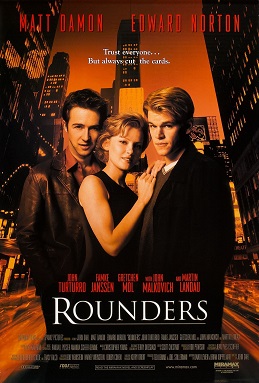
Twenty years ago, the film Rounders brought the poker variation known as “no-limit Texas hold'em” to
the wider public consciousness. The movie inspired thousands of
home-game players to pursue the game, including a young Tennessee
accountant named Chris Moneymaker, who achieved his own “Hollywood
ending” by winning the 2003 World Series of Poker Main Event and
launching the decade's “poker boom”.
If you've ever watched the TV coverage
of no-limit hold'em poker tournaments, you've seen how dramatic some
of the confrontations between players can be. If you watch closely,
you can see how the action of these high-stakes tournaments can add
intrigue and tension to your story.
Character Is As Character Does, Not As
Character Says
One of the most dramatic aspects of TV
poker tournaments is the tension that the players show as they must
make a crucial decision. In most cases, the player will remain silent
for minutes at a time while they deliberate whether to fold their
hand, call the bet, or raise the stakes.
While such a long silent period in a
screenplay may not always work, screenwriters should understand how
to create tension from the situation, rather than from extensive
dialogue. Since poker players are not allowed to tell the truth when
asked about their cards during a hand, screenwriters should apply
that rule and put their characters in positions that require them to
lie and increase the tension in their scenes.
Keep The Audience In The Know
Another appealing aspect of TV poker
tournaments is the “hole card cam”, which allows the TV viewers
to see the cards each player holds. (NOTE: The "hole card cam" was invented by Henry Orenstein, a Polish immigrant and Holocaust survivor who also helped launch the "Transformers" toy line in the U.S.) While the audience is privy to
this information, the other players aren't. This information allows
the audience to recognize when a player is bluffing, or when they
have the best hand, which keeps the viewer invested in watching the
results.
While many rookie writers value the
“twist” ending, this technique can come across as more of a way
for the writer to show off, rather than a way to keep the audience
engaged. The classic horror trope of showing the killer on one side
of the door and the soon-to-be victim on the other has kept audiences
engaged for decades. Not only is it not a sin to reveal information
to the audience before the characters know, it can keep the audience
riveted to see the character's reaction when they find out.
Around The Turn And Down The River
After each player receives their two
hole cards and decides whether they want to stay in the hand, the
dealer puts out three cards on the table, face-up, for each remaining
player to use. These three cards are collectively known as “the
flop”. After another round of betting, the dealer puts out a fourth
card, called “the turn”. Another round of betting ensues, and the
dealer puts out the fifth community card, called “the river”. The
remaining players show their hands in a “showdown” at the end of
the hand.
This structure bears a resemblance to
the “three-act structure” often taught in most screenwriting
classes. The character starts off with the hand they're dealt, and
must make a decision to proceed with their journey. The character
“flops” into a new situation at the start of Act II and
encounters new allies (a strong hand) or new enemies (a weak hand).
The story takes a “turn” at the midpoint of Act II, then the
character takes a trip down a menacing “river” at the start of
Act III, leading up to a “showdown” with the antagonist.
Standing Still Is Not An Option
In no-limit hold'em, two players are
required to make minimum “blind” bets before the hand starts to
ensure that at least some chips are already in the pot. In tournament
play, the minimum bets increase at specific time increments. As the
blinds go up, the player's holdings get relatively smaller, even if
they maintain the same amount of chips. The increasing minimum bets force players with "short stacks" into desperate moves to stay alive.
In all types of fiction, but especially
in screenwriting, stasis equals death, at least the death of the
audience's interest. When the character chooses to stand still, the
world will still move on around them—and, quite possibly, run over
them. The writer must keep the character moving, either physically or
emotionally or both, to keep the story going and to maintain the
audience's interest.
Heads-Up To The Finish
When the final two players of the
tournament remain, they face off in “heads-up” play. These final
hands are often as much about will and skill as they are about cards
and chips. The final two players may have clashed previously over the
course of hours or days, but now it's for all the marbles.
Whether it's poker, boxing, MMA, or
tennis, audiences love to see a great one-on-one matchup. The same
appeal holds in screenplays. Whenever the writer can set up a
climactic confrontation between the protagonist and the antagonist,
whether that confrontation uses fists, guns, legal tactics, or
emotional manipulation, the audience will want to see who wins.
All In
The most thrilling part of any no-limit
poker hand is when one player bets all their chips on a single hand.
If they win, they double up and stay in the tournament. If they lose,
it's “Wait Til Next Year.” This moment comes when the player says
two simple words: “All In”.
As a writer, you have to risk a lot to
put your story on paper. You have to risk putting in long hours for
little or no reward. You have to risk missing out on fun times with
friends and family to work on your story. You have to risk feeling
like your story isn't good enough for anyone to want to read or see.
Just like in poker, the only way to win
at the screenwriting game is to go “All In”.
If you want your story to be a winner,
Story Into Screenplay offers a wide range of script services,
including coverage reports, rewrite services, and both live and
online hourly consultations.
You can email Story Into Screenplay at
storyintoscreenplayblog(at)gmail(dot)com, or send a message through
the Facebook page.
"It's no wonder that truth is
stranger than fiction. Fiction has to make sense." - Mark Twain
From Homer's Iliad, to
Shakespeare's “history plays” to the recent spate of “based on
a true story” movies like BlacKkKlansman, Bohemian Rhapsody, First Man, and White Boy Rick, authors and
dramatists have found a wealth of story ideas in historical events.
However, films and TV shows that have purported to tell “true
stories” have been attacked for not always sticking to the facts.
The important factor that these critics
fail to take into account is that the script writer's job is to tell
an entertaining story, not to recite the actual events. To paraphrase
Dr. Leonard “Bones” McCoy from Star Trek, “Dammit, Jim,
I'm a screenwriter, not a historian!”
In recent months, I've worked with a
few clients who have been developing scripts based on historical
figures and events. While the stories they want to tell are
compelling, these writers also risk being drawn down what's called the
“research rabbit hole”. They get so intent on doing all the
research and making sure their facts are correct, that they forget
that their job is to TELL A STORY, not write a history paper.
The key to writing a successful
historical screenplay is the same as that of writing a successful
script out of pure imagination: create compelling characters, and
place them into conflict. The VOTE Method can show you how to
create strong characters in just a few lines, as well as how to
create powerful conflicts between those characters.
One of the facets of a successful
screenplay is the creation of a memorable antagonist. In some
historical screenplays, the writer had to forgo historical accuracy
to create an antagonist that could challenge their main character. In
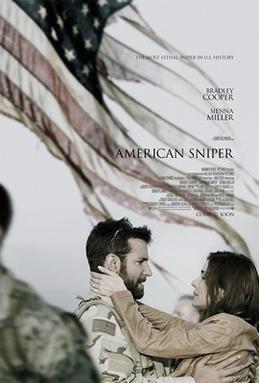
American Sniper, screenwriter Jason Hall created “The
Butcher”, an enemy sniper to challenge American sniper Chris Kyle
(Bradley Cooper). In A Beautiful Mind, writer Akiva Goldsman
created the character Parcher (Ed Harris) to represent John Nash's
(Russell Crowe) mental illness.
Just as with adaptations from other
media, a writer who seeks to create a screenplay based on true
events should not tie themselves down to those events, characters,
and sequences if they don't fit the narrative. Changing the order of
events, combining characters, or even making up characters out of
whole cloth is totally permissible (within reason) when writing a
historical screenplay.
Your job is to do enough research to
establish the characters, get a feel for the events, and tell the
story in the most compelling and entertaining way possible. After
all, “Titanic” wasn't the most historically accurate film of all
time, either, but that didn't stop it from making over $2.1 BILLION worldwide.
Now that's what I call “making
history”!
If you need advice on how to make
your historical screenplay resonate with audiences, contact Story
Into Screenplay. We offer one-on-one consultations, coverage-style
reports, and full script writing and re-writing services. You can
reach us at storyintoscreenplayblog(at)gmail(dot)com, or send a
message through our Facebook page.