Gerald Hanks Filmography

Friday, September 28, 2018

Screenwriting with the VOTE Method: The Hate U Give (2018)


The new film The Hate U Give is based on the 2017 young adult novel by Angie Thomas. The screenplay by veteran writer Audrey Wells (Shall We Dance?, Under the Tuscan Sun) effectively shows how the lead character, Starr Carter (Amandla Stenberg), attempts to keep the two worlds in which she lives separate, but also how circumstances beyond her control bring those worlds into conflict.

In this post, we'll look at how the writer creates strong characters by examining the story through the lens of the VOTE Method. The point of this analysis is not to criticize the film or its messages, but to show aspiring writers how they can create memorable characters in their own stories by using the VOTE Method, as well as how it can be applied to contemporary films.

THIS REVIEW CONTAINS SPOILERS

Starr Carter (protagonist)
FIRST HALF
Victory: Starr's Victory is to keep as much separation from her African-American, lower-middle-class home life separate from the white, upper-class world of her private school.

Obstacles: Her primary Obstacles come from people on both sides of her life. At home, she must deal with her ex-drug dealer father Maverick (Russell Hornsby), her overprotective mother Lisa (Regina Hall), and her friend Kenya (Dominique Fishback). At school, she tries to deal with her friend and teammate Hailey (Sabrina Carpenter) and her boyfriend Chris (K.J. Apa).

The biggest Obstacle occurs when her childhood friend Khalil (Algee Smith) is shot by a white police officer as he was giving her a ride home from a party. Starr's neighborhood erupts in protests, led by an activist attorney (Issa Rae) who urges Starr to come forward as a witness to the shooting.

Tactics: Her primary set of Tactics come from the creation of a second persona, which she calls “Starr Version 2”. In a voice-over at school, she describes how “Starr 2.0” never uses slang and avoids confrontation to keep from being seen as “ghetto”.

After the news reports on the shooting and the subsequent protests, Starr tells her school friends that she doesn't know Khalil.

Energy: Starr gets her Energy from her desire to satisfy her mother's dream of her going to college and getting out of the “hood”.

These all hold until near the film's midpoint, when Starr sees the reactions on both sides to her friend's death. Her African-American friends and neighbors use the tragedy as a call to action, while the white kids at her school treat it as an excuse to cut class.

SECOND HALF
Victory: Starr's Victories are to see Khalil's killer brought to justice and to speak for her lost friend.

Obstacles: Starr's Obstacles come from both sides of the law. On one side, a justice system that is hesitant to indict a white police officer for shooting an unarmed young African-American man. On the other side, she has to face down King (Anthony Mackie), the leader of the neighborhood gang, who was using Khalil to sell his drug shipments.

At school, she must also deal with rising resentment among her white classmates, including Hailey, who maintain that the white officer was justified in the shooting, in spite of what Starr saw that night.

Tactics: Starr's Tactics include speaking out anonymously in the media, testifying before a grand jury, and joining in the protests against police brutality.

At school, she shows Hailey how a hairbrush can be mistaken for a weapon and forces her into the same position of fear and terror she felt that night.

Energy: Starr gets her Energy from her need to honor Khalil's memory and to see justice done for her friend, her family, and her neighborhood.


The Hate U Give shows how a protagonist can have an intense desire to achieve a Victory in the film's first half, then have it flipped in the second half. When your protagonist learns that they have been chasing the wrong desire halfway through your story, you can use that moment of revelation as a turning point for the character, as well as a dramatic hook for your audience.

=====

If you need help with building strong characters for your script, contact Story Into Screenplay. We offer script coverage reports, rewrite services, and one-on-one consultations. For a list of services and prices, please email storyintoscreenplayblog(at)gmail(dot)com, or send a message to our Facebook page.

=====


Gerald Hanks from Story Into Screenplay will be appearing at the Louisiana Comic Con in Lafayette, Louisiana, on Saturday, October 6, and Sunday, October 7.

Gerald will be presenting two panels:

Concept vs. Character: Where to Start With Your Comic Book, Novel, or Screenplay
Saturday, October 6th at 12:30PM

The Power of the VOTE: How to Create Strong Characters for Your Comic Book, Novel, or Screenplay
Sunday, October 7th at 1:30PM

Both panels will be in the Second Panel Room at the Cajundome Convention Center.


Get your advance tickets online or at the Cajundome box office today!

Monday, September 24, 2018

Raising the Stakes: Six Things No-Limit Texas Hold'em Poker Tournaments Can Teach You About Story Structure


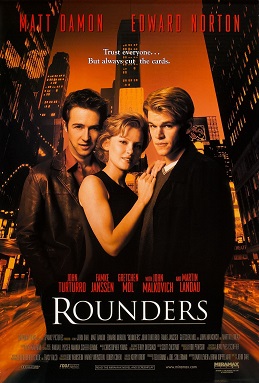
Twenty years ago, the film Rounders brought the poker variation known as “no-limit Texas hold'em” to the wider public consciousness. The movie inspired thousands of home-game players to pursue the game, including a young Tennessee accountant named Chris Moneymaker, who achieved his own “Hollywood ending” by winning the 2003 World Series of Poker Main Event and launching the decade's “poker boom”.


If you've ever watched the TV coverage of no-limit hold'em poker tournaments, you've seen how dramatic some of the confrontations between players can be. If you watch closely, you can see how the action of these high-stakes tournaments can add intrigue and tension to your story.

Character Is As Character Does, Not As Character Says

One of the most dramatic aspects of TV poker tournaments is the tension that the players show as they must make a crucial decision. In most cases, the player will remain silent for minutes at a time while they deliberate whether to fold their hand, call the bet, or raise the stakes.


While such a long silent period in a screenplay may not always work, screenwriters should understand how to create tension from the situation, rather than from extensive dialogue. Since poker players are not allowed to tell the truth when asked about their cards during a hand, screenwriters should apply that rule and put their characters in positions that require them to lie and increase the tension in their scenes.

Keep The Audience In The Know

Another appealing aspect of TV poker tournaments is the “hole card cam”, which allows the TV viewers to see the cards each player holds. (NOTE: The "hole card cam" was invented by Henry Orenstein, a Polish immigrant and Holocaust survivor who also helped launch the "Transformers" toy line in the U.S.) While the audience is privy to this information, the other players aren't. This information allows the audience to recognize when a player is bluffing, or when they have the best hand, which keeps the viewer invested in watching the results.


While many rookie writers value the “twist” ending, this technique can come across as more of a way for the writer to show off, rather than a way to keep the audience engaged. The classic horror trope of showing the killer on one side of the door and the soon-to-be victim on the other has kept audiences engaged for decades. Not only is it not a sin to reveal information to the audience before the characters know, it can keep the audience riveted to see the character's reaction when they find out.

Around The Turn And Down The River

After each player receives their two hole cards and decides whether they want to stay in the hand, the dealer puts out three cards on the table, face-up, for each remaining player to use. These three cards are collectively known as “the flop”. After another round of betting, the dealer puts out a fourth card, called “the turn”. Another round of betting ensues, and the dealer puts out the fifth community card, called “the river”. The remaining players show their hands in a “showdown” at the end of the hand.


This structure bears a resemblance to the “three-act structure” often taught in most screenwriting classes. The character starts off with the hand they're dealt, and must make a decision to proceed with their journey. The character “flops” into a new situation at the start of Act II and encounters new allies (a strong hand) or new enemies (a weak hand). The story takes a “turn” at the midpoint of Act II, then the character takes a trip down a menacing “river” at the start of Act III, leading up to a “showdown” with the antagonist.

Standing Still Is Not An Option

In no-limit hold'em, two players are required to make minimum “blind” bets before the hand starts to ensure that at least some chips are already in the pot. In tournament play, the minimum bets increase at specific time increments. As the blinds go up, the player's holdings get relatively smaller, even if they maintain the same amount of chips. The increasing minimum bets force players with "short stacks" into desperate moves to stay alive.


In all types of fiction, but especially in screenwriting, stasis equals death, at least the death of the audience's interest. When the character chooses to stand still, the world will still move on around them—and, quite possibly, run over them. The writer must keep the character moving, either physically or emotionally or both, to keep the story going and to maintain the audience's interest.

Heads-Up To The Finish

When the final two players of the tournament remain, they face off in “heads-up” play. These final hands are often as much about will and skill as they are about cards and chips. The final two players may have clashed previously over the course of hours or days, but now it's for all the marbles.


Whether it's poker, boxing, MMA, or tennis, audiences love to see a great one-on-one matchup. The same appeal holds in screenplays. Whenever the writer can set up a climactic confrontation between the protagonist and the antagonist, whether that confrontation uses fists, guns, legal tactics, or emotional manipulation, the audience will want to see who wins.

All In

The most thrilling part of any no-limit poker hand is when one player bets all their chips on a single hand. If they win, they double up and stay in the tournament. If they lose, it's “Wait Til Next Year.” This moment comes when the player says two simple words: “All In”.


As a writer, you have to risk a lot to put your story on paper. You have to risk putting in long hours for little or no reward. You have to risk missing out on fun times with friends and family to work on your story. You have to risk feeling like your story isn't good enough for anyone to want to read or see.

Just like in poker, the only way to win at the screenwriting game is to go “All In”.

If you want your story to be a winner, Story Into Screenplay offers a wide range of script services, including coverage reports, rewrite services, and both live and online hourly consultations.

You can email Story Into Screenplay at storyintoscreenplayblog(at)gmail(dot)com, or send a message through the Facebook page.


Thursday, August 23, 2018

Telling A True Story? Don't Let The Facts Get In The Way!


"It's no wonder that truth is stranger than fiction. Fiction has to make sense." - Mark Twain

From Homer's Iliad, to Shakespeare's “history plays” to the recent spate of “based on a true story” movies like BlacKkKlansman, Bohemian Rhapsody, First Man, and White Boy Rick, authors and dramatists have found a wealth of story ideas in historical events. However, films and TV shows that have purported to tell “true stories” have been attacked for not always sticking to the facts.

The important factor that these critics fail to take into account is that the script writer's job is to tell an entertaining story, not to recite the actual events. To paraphrase Dr. Leonard “Bones” McCoy from Star Trek, “Dammit, Jim, I'm a screenwriter, not a historian!”

In recent months, I've worked with a few clients who have been developing scripts based on historical figures and events. While the stories they want to tell are compelling, these writers also risk being drawn down what's called the “research rabbit hole”. They get so intent on doing all the research and making sure their facts are correct, that they forget that their job is to TELL A STORY, not write a history paper.

The key to writing a successful historical screenplay is the same as that of writing a successful script out of pure imagination: create compelling characters, and place them into conflict. The VOTE Method can show you how to create strong characters in just a few lines, as well as how to create powerful conflicts between those characters.

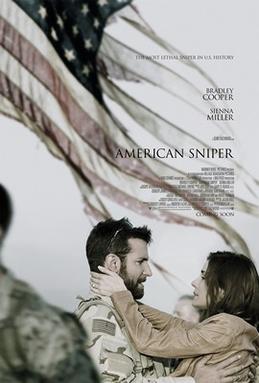
One of the facets of a successful screenplay is the creation of a memorable antagonist. In some historical screenplays, the writer had to forgo historical accuracy to create an antagonist that could challenge their main character. In American Sniper, screenwriter Jason Hall created “The Butcher”, an enemy sniper to challenge American sniper Chris Kyle (Bradley Cooper). In A Beautiful Mind, writer Akiva Goldsman created the character Parcher (Ed Harris) to represent John Nash's (Russell Crowe) mental illness.

Just as with adaptations from other media, a writer who seeks to create a screenplay based on true events should not tie themselves down to those events, characters, and sequences if they don't fit the narrative. Changing the order of events, combining characters, or even making up characters out of whole cloth is totally permissible (within reason) when writing a historical screenplay.

Your job is to do enough research to establish the characters, get a feel for the events, and tell the story in the most compelling and entertaining way possible. After all, “Titanic” wasn't the most historically accurate film of all time, either, but that didn't stop it from making over $2.1 BILLION worldwide.

Now that's what I call “making history”!

If you need advice on how to make your historical screenplay resonate with audiences, contact Story Into Screenplay. We offer one-on-one consultations, coverage-style reports, and full script writing and re-writing services. You can reach us at storyintoscreenplayblog(at)gmail(dot)com, or send a message through our Facebook page.

Tuesday, June 12, 2018

Concept vs. Character, or What a Talking Raccoon and a Walking Tree Taught Me About Screenwriting


A few weeks ago, I had the pleasure of sitting on some panels at the Comicpalooza convention in Houston. I moderated a horror writing panel with a number of accomplished writers, including Joe  R. Lansdale. The next day, I was on a screenwriting panel with Joe's son, Keith. These two gentlemen provided a wealth of information and advice to aspiring screenwriters about the importance of characterization.

As I walked the convention floor, I also talked to a number of writers who were displaying their books. When I would talk to most of these writers, they would pitch their books based on the concept of their story world, rather than the struggles of their characters within those worlds. This pitching approached turned me off, as I'm sure it did to other convention-goers, based on the number of copies left on the authors' tables.

As I've said in previous posts, audiences fall in love with characters, not ideas. The biggest example of the importance of characters over concepts often come from the genres that are also the most in love with its concepts: sci-fi and fantasy.


The examples I use in my teaching and consulting work are the characters of Rocket Raccoon and Groot from Marvel Studios' Guardians of the Galaxy films. On paper, the concepts of these characters are so absurd as to be laughable.

  • A three-foot-tall talking raccoon with a gun fetish? 
  • An eight-foot-tall walking tree that says the same three words?

If any writer were to pitch these characters in almost any venue, be it film, novel, or TV series, they would likely be laughed out of the room.

So why did it work? Why do millions of people love these characters, even if they aren't always likable?

The main reason is that writer/director James Gunn treated Rocket and Groot like characters, and not like caricatures. In the first film, he showed Rocket's pain and anger at his transformation, which he hides behind his false bravado. He showed that Groot was a loyal friend and slow to anger, until he was pushed into action and made the choice to sacrifice himself to save his friends.


At the opposite end of the spectrum lies the films of the DC Extended Universe, most notably “Batman v.Superman: Dawn of Justice”. On paper, these concepts are a no-brainer: take the most recognizable superheroes in the world, pit them against each other, and then put them against a foe so tough that they have to work together to defeat it.

Simple, right? So how could two award-winning writers in Chris Terrio (Argo) and David S. Goyer (Dark Knight Trilogy) get it so wrong? One of the points of failure in the story was that they failed to make the main characters relatable. Both heroes (and their alter egos) come across as aloof and disconnected from their world, and from the audience, despite their “maternal connection” to each other.

This infatuation with concept over characterization is a major reason why writers, especially writers of genre fiction, struggle to build and audience. As I wrote in my first post, no one cares about an “original idea” or “ground-breaking concept” until they care about the characters. Strong, well-developed characters can save a flimsy premise, but a great premise won't save flimsy characters.

If you need help in creating strong characters for your screenplay, novel, or comic book concept, contact us at Story Into Screenplay. Whether you have the seed of an idea, or a fully-completed feature-length script, Story Into Screenplay can help. We offer script consultation, coverage reports, and rewrite services to ensure that your screenplay is ready for the most discerning reader.

You can reach us by email at storyintoscreenplayblog(at)gmail(dot)com, or send us a message on our Facebook page.


Wednesday, March 28, 2018

The Room, The Disaster Artist, and The Joy of Being Terrible

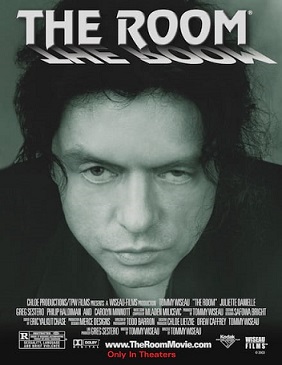
Theatrical Poster for
The Room

I realize I'm late to the party, but I recently had the “pleasure” of watching The Room in a double feature with The Disaster Artist, the adaptation of actor Greg Sestero's book about the making of the infamous film.

Since The Room came out and became a cult hit (in spite of itself), many screenwriters have asked, “How does a piece of garbage like that get made, when I can't even get anyone to look at my scripts?”

The answer is simple. The Room was nothing short of a vanity project for writer/director/producer/star Tommy Wiseau. He reportedly poured more than $6 million into the project in 2002, which comes out to nearly $8.5 million in 2018 dollars.

Aside from the amateurish acting, the inconsistent direction, and the excruciating love scenes, one of the hallmarks of The Room was its poor script. This attempt at a screenplay featured characters whose relationships were unclear, characters who appeared for the first time past the halfway point, and storylines that were picked up and dropped with no explanation.

If The Room was a train wreck, then The Disaster Artist shows how the engineer and the driver got together to drive the train straight off the rails. The film shows Tommy Wiseau (James Franco) as a modern-day Don Quixote, with Sestero (Dave Franco) as his Sancho Panza, both of them tilting at the windmill known as “Hollywood Stardom”.

Where The Room is excruciating to watch, The Disaster Artist is oddly inspiring. It shows how someone with no talent, no experience, and a complete unwillingness to work with others can succeed if they're stubborn enough. (Insert contemporary political reference here.)

In its own way, The Disaster Artist parallels one of the finest films of all time, and my personal favorite to use as a teaching tool: Rocky. In both films, a lead character with an unrecognizable accent attempts to reach the heights of their profession, assembles a rag-tag crew, and achieves their dreams, but not in the way that they had anticipated.

The success of Rocky, the cult status of The Room, and the Academy Award-nominated screenplay of The Disaster Artist shows that audiences love a great underdog story. The lesson to take away from the successes of these three films is simple: Don't be afraid to be terrible.

Your ideas suck. Your writing is unreadable. Your dialogue sounds like it's coming from an alien who's just recently learned the concept of social interaction. Your characters have the depth of wet tissue paper. Your story has the frenetic pace of a tranquilized sloth.

Your first draft will suck. Get used to it.

Your rewrites will feel like a never-ending root canal in your brain. Them's the breaks.

Every reader will find something new and different to hate about your script. Just accept it.

You will hate your script, your characters, and your life. You will become a miserable excuse for a human being.

How's that for motivation?

As the old workplace poster says, “You don't have to be crazy to work here, but it helps.”

As a writer, you have to be crazy just to get started. You have imaginary conversations in your head with people who don't exist. Not only that, you expect companies to pay millions of dollars and employ dozens of people to take your writing from the page to the screen. Then, you expect people to pay up to $15 a ticket to watch what you wrote. If that's not crazy, then what is?

Was Tommy Wiseau crazy? By nearly every objective measure, he was, to use the clinical terms, nuttier than a fruitcake. But did he succeed? He made his movie, his way, with his script. A decade and a half later, people are still watching it, talking about it, and (GASP!) blogging about it.

So enjoy writing your terrible script. Have fun pounding your pile of garbage into something resembling a usable screenplay. Make party hats out of those harsh coverage reports and form rejection letters.

Tell your story. Write your script. Get it made. Tilt at those windmills.

Because you're the only one who can.

*****
If you need help in improving your “terrible” script, Story Into Screenplay can help. We offer script consultations, coverage reports, and expert advice on how to hone your screenplay. Contact us at storyintoscreenplayblog[at]gmail[dot]com, or send us a message on our Facebook page.

*****
Gerald Hanks of Story Into Screenplay will be appearing at the Comicpalooza sci-fi convention again this year. The convention will be held at the George R. Brown Convention Center in Houston, Texas, from Friday, May 25, to Sunday, May 27.

Gerald will be on two panels:

Saturday 5/26
1:30 - 2:30pm
Horror for the 21st Century: Film and Literature

Sunday 5/27
3:00 - 4:00pm
No Money, No Problem - Screenwriting for Low Budget Filmmaking

We'll be posting more details and panels as they become available.

Wednesday, December 27, 2017

The Force Awakens vs. The Last Jedi: Do Characters Serve The Plot, or Vice Versa?


NOTE: This article will contains LOTS OF SPOILERS for The Last Jedi.

At the end of The Force Awakens, Rey (Daisy Ridley) finishes her quest to find Jedi Master Luke Skywalker (Mark Hamill) and hand him his lightsaber. The music swells, and the audience awaits Luke's reaction to encountering his old weapon and, in many ways, his old life.

At the beginning of The Last Jedi, Luke takes the weapon from Rey, and casually tosses it over his shoulder like an old gum wrapper.

In The Force Awakens, Kylo Ren (Adam Driver) worships Darth Vader, even crafting a masked helmet to resemble his idol

In The Last Jedi, Ren smashes the helmet and shows his true (scarred) face throughout the rest of the film.

In so many moments, The Last Jedi takes many of the premises built in The Force Awakens, as well as those from many of the previous Star Wars films, and tosses them away as casually as Luke tossed away his “laser sword”.

The Last Jedi director Rian Johnson was the first director of a Star Wars film to also write the script since George Lucas did double duty with the “prequel” trilogy. Die-hard Star Wars fans panned the prequels, and have voiced their disapproval of The Last Jedi over The Force Awakens.

The crucial difference between Lucas' and Johnson's approaches stem from their approaches to plot vs. character. Lucas primarily used the characters as instruments for his plots, specifically his ideas on the “hero's journey” and conflicts between fathers and sons (or mentors and students). Johnson gives the characters more agency, making for a looser and less structured story.

While many fans may complain about the more chaotic nature of The Last Jedi over the films of the “classic” trilogy, writers should keep in mind that the ability to give characters agency and put them into conflict will be what drives your story.

At nearly every turn, Johnson gives both old and new characters power over their “destiny”, including the power to make some boneheaded mistakes.
  • The brave X-Wing pilot Poe Dameron (Oscar Isaac) believes that there is a plot against the remnants of the Resistance, so he organizes a mutiny. He fails to realize his mistake until General Leia Organa Solo (Carrie Fisher) forces her way onto the bridge and shoots him with a stun blaster.
  • The revered hero Finn (John Boyega) attempts to desert the Resistance, until he gets caught by Rose Tico (Kelly Marie Tran).
  • Even the legendary Jedi Master Luke Skywalker makes mistakes. He lets his bitterness over both his own failures as a teacher and those of the Jedi Order throughout history prevent him from teaching Rey how to use her new-found powers.

The Last Jedi had a lot of fan expectations to meet. Fans wanted to see their heroes victorious, the villains vanquished, and their hopes fulfilled. Instead, they got a film in which the characters were more developed than in previous films (despite so many interwoven storylines), but those characters did not meet the fans' expectations.

Writers should always find a way to give their characters more power over their stories. When the plot serves the characters, the story is always fuller, more exciting, and more relatable. When the characters serve the plot, the story is flatter and the characters are puppets. The audience watches the strings, rather than the story itself.

If you have ideas or concepts and want to learn more about how to turn those ideas into marketable scripts, Story Into Screenplay can help. We work with aspiring screenwriters and show them how to create strong characters, develop well-crafted stories, and deliver marketable scripts that will get you noticed.

If you already have a script, Story Into Screenplay also offers script reading and critique services. We can read your script and deliver a detailed coverage report that analyzes your script's characterization, action, dialogue, pacing, and other aspects.

For more information, sample reports, and a rate sheet of our services, please contact us at storyintoscreenplayblog(at)gmail(dot)com, or send a message to our Facebook page.


Good luck, and May The Force Be With You!

Sunday, August 6, 2017

The Most Important Class Any Writer Can Take


Rookie writers have asked me about the best books, classes, and seminars they can use to turn themselves into better writers. While I have a shelf full of books (soon to include my own current work in progress) and have attended numerous classes and seminars, I can attest that the one class that shaped my approach to writing was a class that had little to do with putting pen to paper or fingers to keyboard.

The most important class a writer can take isn't a writing class at all.

It's an acting class.

“But I don't want to be an actor,” the Rookie says. “I want to be a writer. I want to sit in my lonely office and spin stories out of whole cloth, while keeping my interactions with other human beings to an absolute minimum.”

My argument is that, if you want to be a writer, you have to create characters than engage an audience. If you're going to be a screenwriter or a playwright, you have to create characters that actors can use to deliver performances that resonate with an audience.

While I'm far from the first writing blogger to push writers into taking acting classes, I've always maintained that plot, structure, theme, and message should be used as tools to deliver stories about characters. The VOTE Method I teach is adapted from an acting class I took in college, and I've used it ever since to help me be a better writer.

No More Meat Puppets
The biggest mistake most rookie writers make is that they view their stories the other way around. Characters are not mouthpieces. Actors are not meat puppets. Writers should not use them to deliver their sermons on the human condition. When a rookie writer takes this approach, the readers, the actors, and the audience will see through the writer's sanctimony and self-satisfaction.

The best way to avoid this “writer-first” mentality is for writers to put themselves in the actor's shoes. Scene work can also help writers understand the importance of every character in their work. Many rookie writers view the secondary characters as tools to serve their main character's story. When a you work through a scene playing a secondary character, you'll understand that failing to give these characters adequate substance gives the actor too little to do, which leads to a poor or disengaged performance.

Dispel Doubts About Dialogue
One of the major difficulties that rookie writers encounter comes from writing dialogue. They either try to make it sound “natural” or they use it to deliver exposition or “on the nose” observations. Acting classes can teach writers that each line of dialogue must serve one of two purposes:

1. Reveal an aspect of the character
2. Move the story forward

Whey you attempt to learn dialogue in an acting class, you can tell when the lines serve either or both of these purposes or when it sounds stiff or unnatural.

Conflict and Chaos
In real life, most of us try to avoid conflict. In writing, you should seek it out. When you take an acting class, you can see the power that conflict between characters has on creating a memorable scene. When you take part in a scene as an actor, you can feel what that character feels, what fuels their desires, what stands in their way, ans what they'll do to get what they want, all of which will make you a better writer.

Writers ARE Actors
A core requirement of your job as a writer is to deliver characters that will keep an audience riveted to the page, the stage, or the screen. The writing process is all about inhabiting those characters' lives, feeling their experiences, and bringing them to life.

In all of these senses, the writer must serve as an actor for every single character. When a writer understand the process by which an actor inhabits a character, the writer can apply that process into their own methods. From there, character arcs become tools by which the writer delivers a strong character for the actor to portray and a powerful experience for the audience to follow.

Get Help From Story Into Screenplay
If you have a script and you would like a professional-style coverage report, let Story Into Screenplay help. A former screenplay contest judge will evaluate your script and write up a report that will evaluate factors such as character, plot, action, dialogue, and much more.

For a sample report and a rate sheet, email storyintoscreenplayblog[at]gmail[dot]com, or send a direct message through the SIS Facebook page.