Gerald Hanks Filmography

Monday, October 18, 2021

Interview with Christopher Vogler - Author of "The Writer's Journey".

Author and script consultant Christopher Vogler recently celebrated the release of the 25th Anniversary Edition of his seminal book, The Writer's Journey.

Here's a sneak peek with Chris's story on how he got started:


To see my complete interview with Chris, check out this YouTube Playlist.

I will also be attending the Austin Film Festival from Friday evening (22 October) to Sunday afternoon (24 October).

If you're going to be at AFF and would like to discuss how Story Into Screenplay can help you with your script, please drop an email to storyintoscreenplayblog(at)gmail(dot)com with the subject line “Austin Film Festival”.


Saturday, October 9, 2021

Baseball, Screenwriting, and "The Writer's Journey": Home Plate

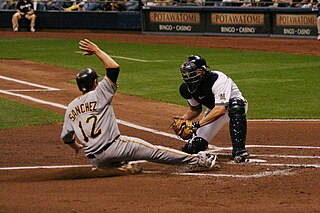
The final stop for the baserunner sits just ninety feet away: home plate. However, he has to get past the catcher, the only player on the field covered in body armor. The catcher stands ready to take out any runner who tries to score.

The final stop for the screenwriter sits a lot farther than ninety feet away: getting your project made, distributed, and in front of an audience. The screenwriter may have to overcome numerous obstacles before they can slide into home.

Scheduling conflicts, legal entanglements, contractual obligations, logistical issues, and so many other problems can delay a script's production or halt it in its tracks (see: March 2020-present). 

Just as a baserunner can take a lead from third base to improve their chances of scoring, the option represents a lead toward getting the script made into a feature film or TV pilot.

Finally, with some beneficial timing and some guidance from the coaching staff, the baserunner can make a break for home, score the winning run, and celebrate with a Gatorade shower from his teammates.

This process also holds for the screenwriter, as they rely on guidance from their script coach, their manager, their agent, and their producer to slide into home and get the cameras rolling.

Let Story Into Screenplay get you ready to play in the Big Leagues and coach you into creating the best possible version of your script.

This week, Story Into Screenplay is offering a professional analysis of the first ten pages of any screenplay (TV pilot, short film, or feature film) for only $10.

For more information about this offer, email storyintoscreenplayblog(at)gmail(dot)com with the subject "10 Pages for $10" or fill in the form on this page.


Friday, October 8, 2021

Baseball, Screenwriting, and "The Writer's Journey": Third Base

Once a runner reaches second base, that doesn't mean that his mission is halfway to completion. The process of getting from second to third often entails more luck and patience than any other part of the game. 

As a writer, once you get to second base and get representation, that agent or manager will work with you like a teammate ready to help you advance to third base: getting your script to a producer.

In baseball, a poor decision by a baserunner between second and third can kill a team's chances to score, despite the best efforts of the teammates hitting behind him. The runner can also encounter bad luck, such as the shortstop snatching a line drive and tagging him out on the way to third. 

In screenwriting, a poor decision can run you right out of the game and kill your chances of selling your script or working with a producer. Current events, poor timing, or just plain bad luck can also send you back to the dugout.

In baseball, when a runner reaches third base, they have another helper in the form of a third-base coach. That coach can advise the runner whether to stay on base or make a mad dash for home plate to score.

In screenwriting, if you're lucky enough to reach third base, the producer could act as your third-base coach and help you put together a deal to get your script made into a movie or TV series.

Check back tomorrow to see how to "score" a deal and take your project from the page to the set to the screen.

This week, Story Into Screenplay is offering a professional analysis of the first ten pages of any screenplay (TV pilot, short film, or feature film) for only $10.

For more information about this offer, email storyintoscreenplayblog(at)gmail(dot)com with the subject "10 Pages for $10" or fill in the form on this page.


Thursday, October 7, 2021

Baseball, Screenwriting, and "The Writer's Journey": Second Base


In baseball, a runner can reach second base either by waiting for his teammate to hit behind him or by creating an opportunity for himself to steal second.

In either case, he'll have to get past the second baseman, either by outrunning the throw or avoiding the tag. If he makes it to second, he's said to be in “scoring position”, which means that he's likely to score on any base hit from a teammate.

If script evaluators are the industry's first basemen, the gatekeepers at the various agencies and management companies are the second basemen. These assistants, interns, and office staff get paid to keep a newbie writer from getting into scoring position with their bosses.

If you have worked with your first base coach to create the best possible version of your script, you can reach second base by getting a manager to help you navigate your career. While an agent can help you negotiate a deal when you land one, a manager can help you find opportunities either to sell your specs or to land a writing assignment.

Query letters, networking events, screenwriting contests, and professional conferences such as the Austin Film Festival (which I will be attending later this month) all provide highly skilled writers with opportunities to make contacts and reach "second base" in their careers.

Check in tomorrow to see how to reach third base: getting connected with a producer. 

This week, Story Into Screenplay is offering a professional analysis of the first ten pages of any screenplay (TV pilot, short film, or feature film) for only $10.

For more information about this offer, email storyintoscreenplayblog(at)gmail(dot)com with the subject “10 Pages for $10” or fill in the form on this page.

Wednesday, October 6, 2021

Baseball, Screenwriting, and "The Writer's Journey": First Base


Just as baseball rules allow the runner to reach first base in several ways, the rules of the screenwriting industry allow for numerous ways to get past the initial gatekeepers.

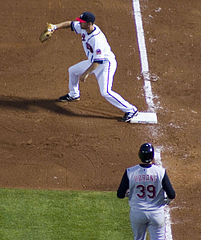
In baseball, if the batter connects with the pitch, the first baseman serves as the initial "threshold guardian". When the batter runs to first base, he has to outrun the ball before the first baseman catches it.

In screenwriting, if the writer "connects" with a compelling premise, the writer's skills represent their likelihood of getting to "first base". If a writer doesn't understand character development, story structure, or basic grammar, spelling, punctuation, and formatting, they'll never get out of the batter's box.

As a script analyst, contest judge, and coverage writer, my job resembles that of the first baseman. My tasks involve making sure that substandard scripts don't advance to the next base.

As a script consultant, I also act as a first-base coach. My job involves advising writers on how to develop their scripts, execute their timing, and improve their chances of getting the script to the next stage.

Tomorrow, we'll look at how to reach "second base": getting a manager or agent. 

This week, Story Into Screenplay is offering a professional analysis of the first ten pages of any screenplay (TV pilot, short film, or feature film) for only $10.

For more information about this offer, email storyintoscreenplayblog(at)gmail(dot)com with the subject “10 Pages for $10” or fill in the form on this page.


Tuesday, October 5, 2021

Baseball, Screenwriting, and "The Writer's Journey": The Pitch

In baseball, the pitcher stands at the center of the diamond. He strides atop a mound of dirt and hurls the ball toward the plate to start the action. The batter has a fraction of a second to determine if the pitch is a fastball or curveball, if it's close to the plate or further away, and if he should swing.

In screenwriting, coming up with the main idea starts the action. Those ideas can involve plot, characters, setting, or theme. Those concepts can cover the whole story, a vital sequence, a pivotal scene, or even a single line of dialogue.

Just as a batter waits for the best pitch to get them on base, the writer needs to determine which ideas will make for an effective story that an entire team (managers, agents, producers, directors, actors, crew members, etc.) can turn into a movie or TV pilot.

Ideas form the center of any story. Why else do you think they call the process of selling your concept "pitching"?

Unfortunately, at least in this analogy, there's no such thing as a "home run" in screenwriting. No writer can knock the ball over the fence, trot around the bases unopposed, and get the project in front of an audience on their own.

In the screenwriting game, writers have to take it one base at a time. You can't score until you make it to first base. 

That's where Story Into Screenplay comes in. We offer script analysis, one-on-one consulting, scriptwriting, and rewriting services.

Check in with us tomorrow when we'll look at how to reach first base: getting your script in the best possible shape. 

This week, Story Into Screenplay is offering a professional analysis of the first ten pages of any screenplay (TV pilot, short film, or feature film) for only $10.

To take advantage of this offer, email storyintoscreenplayblog(at)gmail(dot)com with the subject "10 Pages for $10".


Monday, October 4, 2021

Baseball, Screenwriting, and “The Writer's Journey”: Introduction

I recently received an e-mail from Ken Lee at Michael Wiese Productions, the publisher of such indispensable screenwriting books as Michael Hauge's Selling Your Story in 60 Seconds, Penny Penniston's Talk The Talk, and Blake Snyder's “Save The Cat” series.

The e-mail regarded the 25th Anniversary of Christopher Vogler's seminal work, The Writer's Journey. Later this week, I look forward to the opportunity to interview Mr. Vogler and get his thoughts on how his approach to story development has changed in the last quarter-century.

In the meantime, I'm re-reading my copy of the Second Edition of The Writer's Journey. One of the more timely aspects that I noticed involved how he illustrated the standard “hero's journey” character arc as a baseball diamond. 

With the end of the regular season and the start of the playoffs on the horizon, I thought I'd look at how to extend his illustration into a full-blown analysis of how the struggle that a screenwriter endures can parallel that of a batter rounding the bases.

As a lifelong baseball fan, seeing both my childhood team (St. Louis Cardinals) and my hometown team (Houston Astros) headed into the post-season reminds me of the incredible skill levels that baseball players possess. 

For instance, if a hitter gets a base hit three times out of every ten at-bats, the media and the fans consider that player as a star. These players spend hours in batting practice, working on their stance, and studying video of both their swing and the pitchers that they'll face.

This aspect should serve as a lesson for those aspiring writers who think that their scripts will guarantee them success. Even the best hitters analyze every aspect of their swing, so every writer should scrutinize every facet of their writing skills. If a writer develops their skills enough (or gets lucky enough) to take a swing with their script and makes contact, then the real fun begins

In The Writer's Journey, Mr. Vogler discusses the concept of "Threshold Guardians". In baseball, the pitcher, catcher, and fielders serve as the "guardians" who prevent the runner from reaching each base. In writing, the various gatekeepers guard each threshold of the process to prevent newbie writers from "scoring" a deal. 

For this week, we'll break down the process of going from a newbie writer to a produced professional by touching each “base” until we look at how to “score” in the industry with a finished feature film or TV pilot.

Visit us tomorrow, when we'll look at how to use your "batter's eye" to find a "pitch" that can help you write a "hit" script.

During this week, Story Into Screenplay is offering a professional analysis of the first ten pages of any screenplay (TV pilot, short film, or feature film) for only $10.

For more information about this offer, email storyintoscreenplayblog(at)gmail(dot)com with the subject “10 Pages for $10” or fill in the form on this page.